Curie Brief
Turn on cookies to sign in
Signing in saves your progress to your Curie account. We can only do that with cookies on — turn them on to continue.
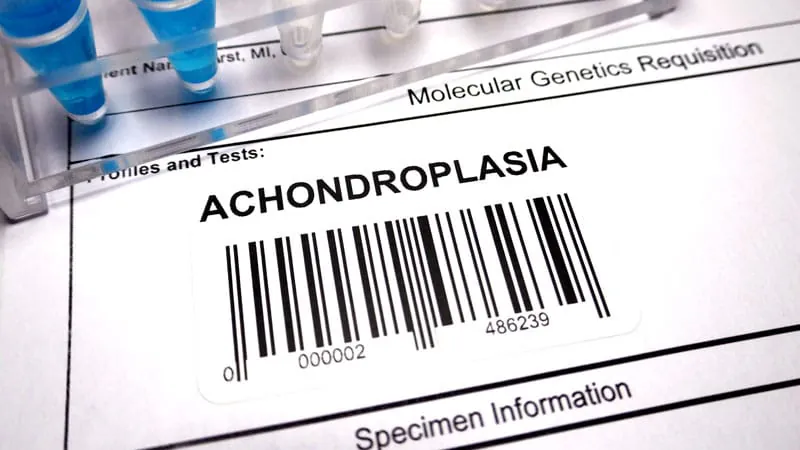
Europe's drug regulator has recommended approving Yuviwel (navepegritide), a once-weekly injection for children aged 2 and older with achondroplasia. In a pivotal trial, treated kids grew nearly 1.5 cm/year faster than those on placebo, with improvements in leg alignment and physical functioning. The European Commission still needs to give final approval.
Europe's drug regulator just gave a thumbs-up to a new weekly treatment for one of the most common forms of dwarfism. The EMA's CHMP recommended marketing authorization for Yuviwel (navepegritide), developed by Ascendis Pharma, for children aged 2 and older with genetically confirmed achondroplasia whose bone growth plates haven't yet closed. Final approval now rests with the European Commission.
Achondroplasia — caused by a mutation in the FGFR3 gene — affects roughly 30,000 people in the EU and goes beyond short stature, impacting muscles, nerves, and cardiorespiratory health. Yuviwel works as a prodrug of C-type natriuretic peptide (CNP), using a slow-release "TransCon" technology to counteract the overactive FGFR3 signaling that stunts bone growth.
By the Numbers
Why it matters: Achondroplasia causes lifelong skeletal and systemic complications. A once-weekly, subcutaneous option that meaningfully boosts growth and improves limb alignment could significantly reduce the burden of disease for thousands of children across Europe.