Curie Brief
Turn on cookies to sign in
Signing in saves your progress to your Curie account. We can only do that with cookies on — turn them on to continue.
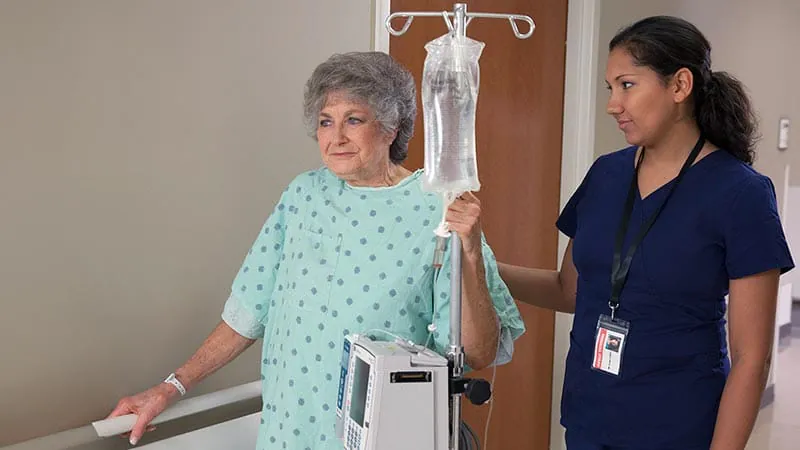
Keeping patients in bed isn't rest — it's a risk. Functional decline can set in as early as day 2 of hospitalization, yet standardized mobility programs remain rare across U.S. hospitals. Experts say a systematic, EMR-integrated approach — not just telling patients to "move more" — is what it takes to meaningfully reduce complications and improve outcomes.
Prolonged bed rest in hospitals isn't just uncomfortable — it's dangerous. Muscle weakness, muscle loss, and delirium can begin as early as day 2 of a hospital stay, yet most U.S. hospitals still lack standardized mobility programs. Experts are calling for a shift away from the traditional "rest and recuperate" mindset toward structured, evidence-based mobilization plans tailored to each patient.
Leading health systems like Kaiser Permanente Northern California and UChicago Medicine are showing what's possible. Kaiser Permanente rolled out its Patient-Specific Mobilization (PSM) program across 21 hospitals, integrating a streamlined assessment tool — the Physical Function Five (PF5) — directly into the EMR to give care teams instant, patient-specific mobilization guidance. UChicago Medicine uses a similar EMR-based scoring system, aiming to mobilize patients three times per 24-hour period.
Key Takeaways:
Why it matters: Hospital-associated deconditioning is a largely preventable problem with real consequences — longer ICU stays, nursing home placements, and higher 30-day mortality. Scalable, structured mobility programs offer a practical path to better patient outcomes and lower costs.