Curie Brief
Turn on cookies to sign in
Signing in saves your progress to your Curie account. We can only do that with cookies on — turn them on to continue.
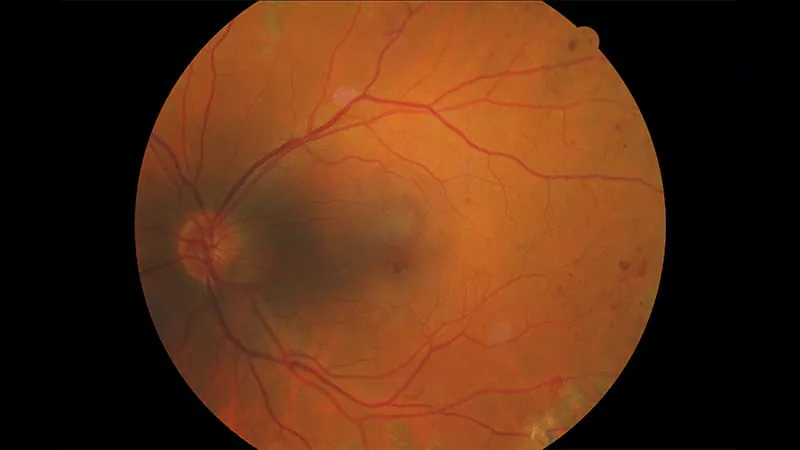
A reformulated anti-VEGF biologic could transform diabetic retinopathy treatment. Phase 3 trial results from GLOW2 show tarcocimab delivered meaningful vision improvement in over 62% of patients at 48 weeks — with effects lasting at least 6 months after a single dose. Experts say twice-yearly dosing could finally make preventive treatment a real-world reality.
Results from the phase 3 GLOW2 trial, presented at the AAO 2026 Annual Meeting, show that tarcocimab — a reformulated investigational anti-VEGF biologic — delivers durable, meaningful improvements in diabetic retinopathy with a dosing schedule of just five injections over a year. The drug combines a large antibody biopolymer conjugate with an unconjugated free antibody, making it less viscous and longer-lasting than previous formulations.
The trial enrolled 255 patients with moderately severe nonproliferative to mild proliferative diabetic retinopathy. Notably, the drug's efficacy held up even in patients using GLP-1 receptor agonists — a reassuring finding given how many diabetes patients are now on these medications.
Why it matters: Treatment burden is one of the biggest barriers to optimal outcomes in diabetic retinopathy. A therapy that works effectively with just twice-yearly dosing could dramatically improve patient adherence and make preventive treatment far more accessible in real-world settings.