Curie Brief
Turn on cookies to sign in
Signing in saves your progress to your Curie account. We can only do that with cookies on — turn them on to continue.
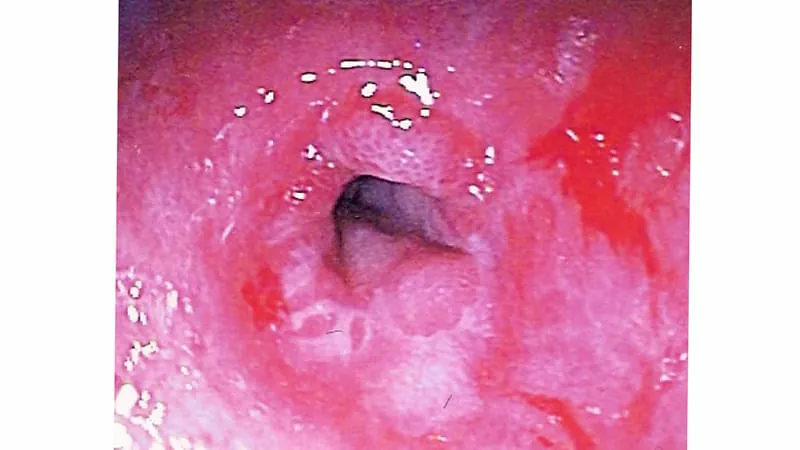
A new clinical trial shows that an 8-week course of high-dose budesonide tablets significantly cuts the risk of esophageal strictures following endoscopic submucosal dissection (ESD) for early esophageal cancer. Two-thirds of treated patients remained stricture-free at 8 weeks, compared to fewer than half on placebo. The drug also reduced the need for follow-up dilations, though it offered limited benefit for the highest-risk patients.
A multinational, randomized, placebo-controlled trial called PEGASUS-1 has found that high-dose budesonide orodispersible tablets (2 mg twice daily for 8 weeks) significantly reduce the formation of esophageal strictures following extensive endoscopic submucosal dissection (ESD) — a minimally invasive procedure increasingly used to treat early esophageal cancers. Strictures are a major and common complication of ESD, particularly when the procedure removes large portions of the esophageal lining.
The benefit was most pronounced in patients with moderate-to-large mucosal defects (75%–<95% of the esophageal circumference), where 92% of budesonide-treated patients remained stricture-free vs. 59% on placebo. For the highest-risk patients (≥95% circumference), outcomes remained poor across both groups. Experts noted the study lacked a head-to-head comparison with systemic steroids — the current standard of care — calling that a key next step.
By the Numbers:
Why it matters: ESD is becoming the go-to approach for early esophageal cancer, but stricture formation can seriously impair patients' ability to swallow and eat. Budesonide's favorable side-effect profile compared to systemic steroids makes it a promising preventive option, especially for intermediate-risk patients.