Curie Brief
Turn on cookies to sign in
Signing in saves your progress to your Curie account. We can only do that with cookies on — turn them on to continue.
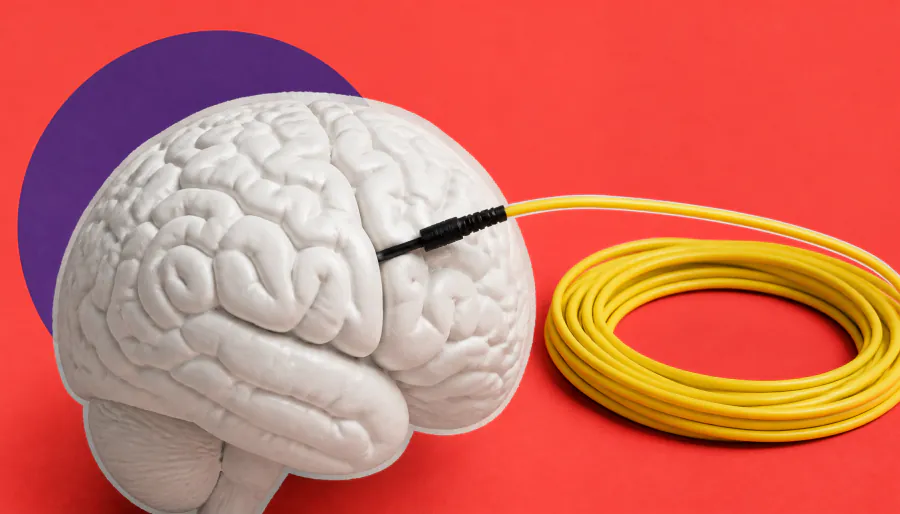
A discovery in pond algae just earned three scientists the 2026 Nobel Prize in Physiology or Medicine. Karl Deisseroth, Peter Hegemann, and Georg Nagel pioneered optogenetics — a technique that uses light to control specific nerve cells. The breakthrough is already being tested to restore vision in patients with retinal degeneration and could one day treat Parkinson's and epilepsy.
What started as a curiosity about how single-celled algae swim toward light has turned into one of the most transformative tools in modern neuroscience. Karl Deisseroth (Stanford), Peter Hegemann (Humboldt University), and Georg Nagel (University of Würzburg) have been awarded the 2026 Nobel Prize in Physiology or Medicine for developing optogenetics — a technique that uses light to switch specific brain cells on and off with remarkable precision.
The key ingredient? A protein called channelrhodopsin, found in the alga Chlamydomonas. When light hits it, the protein opens a channel in the cell membrane, allowing charged particles to flow in and activate the cell. By introducing the channelrhodopsin gene into targeted nerve cells, scientists can control those cells simply by shining a light — leaving surrounding cells completely unaffected.
Key Takeaways:
Why it matters: Optogenetics has fundamentally changed how scientists study the brain — and it's now crossing into the clinic. For HCPs, this Nobel recognition signals that light-based therapies for neurological and retinal diseases are moving from lab curiosity to real-world treatment potential.