Curie Brief
Turn on cookies to sign in
Signing in saves your progress to your Curie account. We can only do that with cookies on — turn them on to continue.
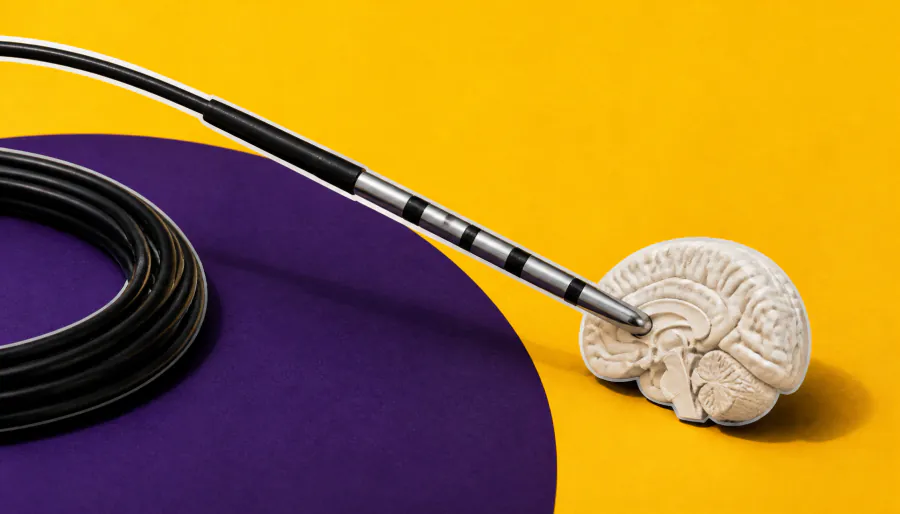
Millimeters matter in the brain. Mount Sinai scientists identified three white matter pathways — the cingulum bundle, forceps minor, and medial uncinate fasciculus — whose stimulation is consistently linked to long-term improvement in treatment-resistant depression patients receiving deep brain stimulation (DBS). Patients who didn't improve after two years notably lacked stimulation of the left cingulum bundle, suggesting precise electrode placement could be the difference-maker.
Pinpointing the brain's depression circuit
Mount Sinai researchers have identified three critical white matter brain pathways whose stimulation is consistently associated with lasting relief in patients with severe, treatment-resistant depression (TRD) undergoing subcallosal cingulate deep brain stimulation (SCC DBS). Published in the American Journal of Psychiatry, the study analyzed the largest multi-cohort SCC DBS dataset to date, drawing from trials including the BROADEN study and a University of Toronto cohort.
The key finding? Patients who failed to improve after two years consistently showed insufficient stimulation of the left cingulum bundle — a striking pattern that may help explain why seemingly similar electrode placements can yield vastly different outcomes. The research supports a shift toward "connectome-based targeting," using individualized brain connectivity maps rather than anatomical landmarks to guide electrode placement — an approach already shaping the ongoing Abbott TRANSCEND randomized controlled trial.
Key Takeaways
Why it matters: For patients with depression that hasn't responded to standard treatments, DBS offers real hope — but only when electrodes engage the right connections. This research gives clinicians a clearer roadmap for precision placement, potentially transforming outcomes for one of psychiatry's most challenging patient populations.