Curie Brief
Turn on cookies to sign in
Signing in saves your progress to your Curie account. We can only do that with cookies on — turn them on to continue.
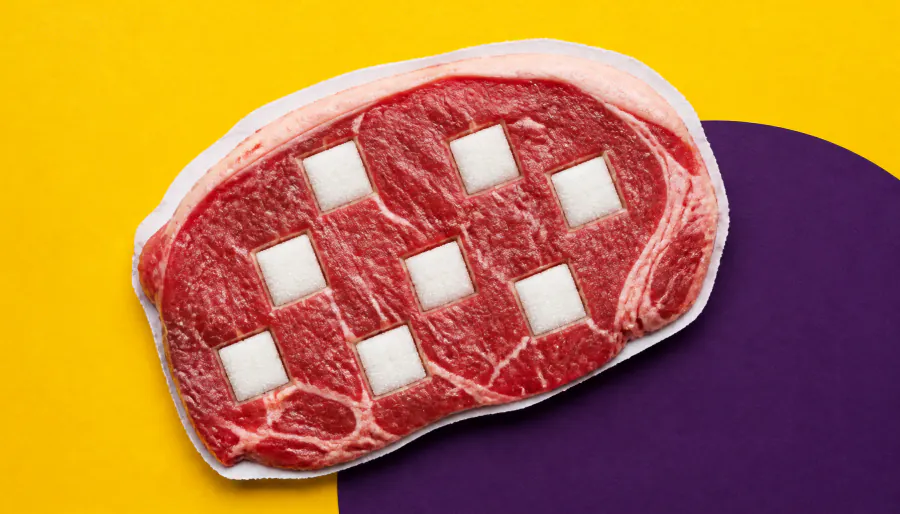
A sugar found in red meat — not just the fat or calories — could be quietly raising your diabetes risk. A study of nearly 90,000 adults found that those who ate the most of this sugar, called Neu5Gc, had a 63% higher risk of developing type 2 diabetes. Researchers think it may trigger chronic inflammation, offering a new explanation for the red meat–diabetes link that goes beyond weight gain.
A large observational study of nearly 90,000 French adults has found a striking link between a little-known sugar in red meat and the risk of developing type 2 diabetes (T2D). The sugar, N-glycolylneuraminic acid (Neu5Gc), is abundant in beef and lamb. Humans can't naturally produce it, so when consumed, the immune system may flag it as foreign — triggering a persistent inflammatory response that researchers suspect could interfere with insulin function and raise diabetes risk.
The study, presented at the European Association for the Study of Diabetes (EASD) Annual Meeting in Milan, followed participants for a median of 7.2 years. Crucially, obesity only accounted for about 13% of the association, suggesting the effect goes well beyond weight gain. Dairy products, which also contain Neu5Gc in smaller amounts, showed no significant link to T2D risk.
By the Numbers:
Why it matters: This research points to a potential new biological mechanism — chronic immune-driven inflammation — that could help explain why red meat consumption is tied to diabetes risk, independent of body weight. While the findings are preliminary and observational, they open the door to dietary strategies, like swapping beef and lamb for poultry or plant-based proteins, that could one day be used to reduce T2D risk at a population level.