Curie Brief
Turn on cookies to sign in
Signing in saves your progress to your Curie account. We can only do that with cookies on — turn them on to continue.
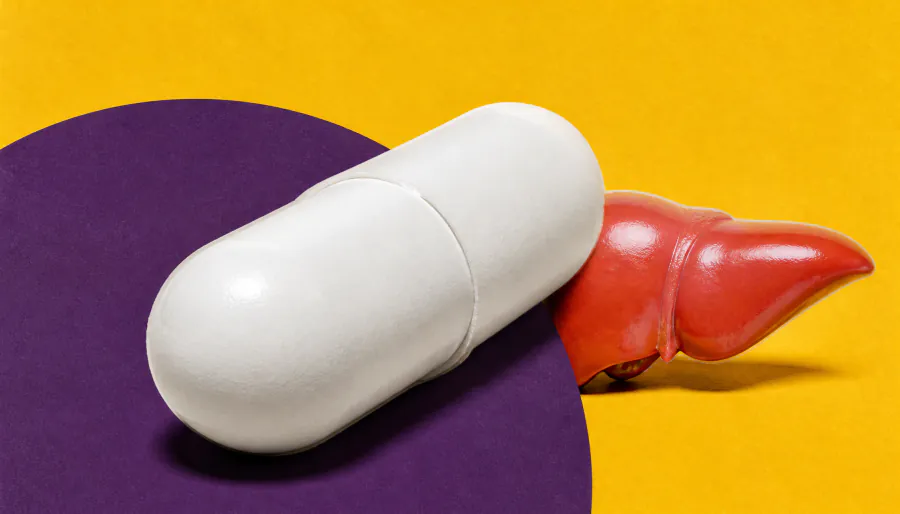
A new drug candidate called DT-109 has reversed severe fatty liver disease in animal models — not by targeting the liver directly, but by fixing the gut. Developed at Michigan Medicine, the compound reduces harmful gut bacteria, strengthens the intestinal lining, and blocks inflammatory substances from reaching the liver. Researchers say it could also have implications for cardiovascular disease.
Scientists at Michigan Medicine have developed an experimental drug, DT-109, that reversed metabolic dysfunction-associated steatohepatitis (MASH) — a severe form of fatty liver disease — in animal studies by targeting the gut rather than the liver itself. The compound, a glycine-based tripeptide, works by reducing overgrowth of Clostridium perfringens bacteria, lowering ammonia production in the intestines, and reinforcing the gut's protective lining. This prevents harmful microbial substances from traveling to the liver and triggering inflammation. Results were published in The Journal of Clinical Investigation.
The drug showed particularly encouraging results in nonhuman primates, whose gut and liver biology closely mirrors that of humans. Beyond liver disease, prior research suggests DT-109 may also reduce atherosclerotic plaque formation and vascular calcification — pointing to potential cardiovascular benefits. Researchers are also exploring its possible use in inflammatory bowel disease.
Key Takeaways:
Why it matters: MASH remains notoriously hard to treat, and effective therapies are scarce. DT-109 represents a novel gut-targeted approach that could address both liver and cardiovascular complications — two conditions that frequently co-occur in metabolic disease patients.