Curie Brief
Turn on cookies to sign in
Signing in saves your progress to your Curie account. We can only do that with cookies on — turn them on to continue.
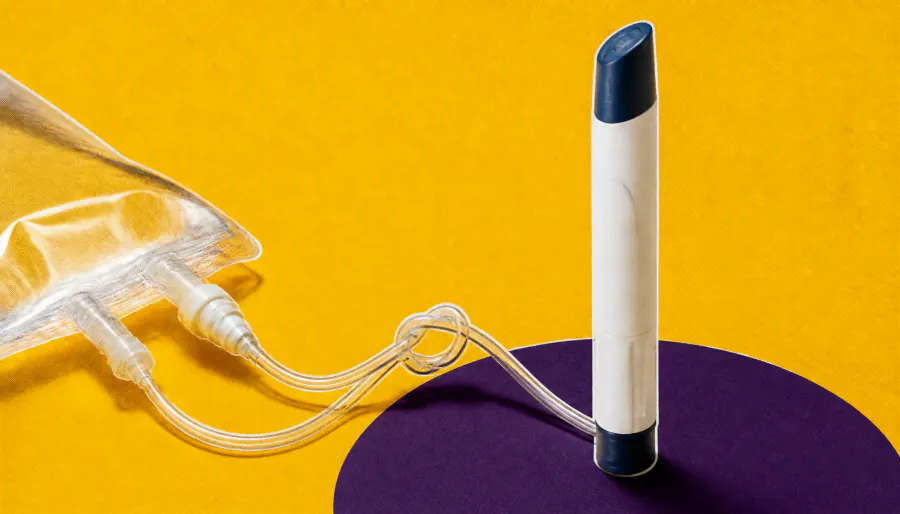
The FDA has approved Enspryng (satralizumab-mwge), an IL-6 inhibitor made by Genentech/Roche, as the first subcutaneous at-home treatment for thyroid eye disease (TED). Backed by the phase 3 SatraGO program, it joins Tepezza and Lumvoa as the third FDA-approved therapy for TED. Patients or caregivers can self-administer it after training from a healthcare provider.
The FDA has approved Enspryng (satralizumab-mwge, Genentech/Roche), an interleukin-6 (IL-6) inhibitor, for the treatment of thyroid eye disease (TED) — marking a notable milestone as the first subcutaneous therapy for the condition that patients or caregivers can administer at home after proper training.
The approval was backed by data from the phase 3 SatraGO program. In the SatraGO-2 trial, Enspryng showed a 52.9% proptosis response rate and 60.7% diplopia reduction, compared to just 23.4% and 25.8% in the placebo group — results described as "significant and clinically meaningful." The SatraGO-1 trial, however, missed its prespecified primary efficacy endpoint at week 24. The drug's safety profile was consistent with its established use in neuromyelitis optica spectrum disorder (NMOSD), for which it was previously approved.
Enspryng is now the third FDA-approved treatment for TED, joining Tepezza (teprotumumab-trbw) and Lumvoa (veligrotug-vvze).
By the Numbers:
Why it matters: TED patients have historically had limited treatment options. Enspryng's at-home subcutaneous delivery offers a more convenient alternative to infusion-based therapies, potentially improving adherence and quality of life for those managing this debilitating condition.