Curie Brief
Turn on cookies to sign in
Signing in saves your progress to your Curie account. We can only do that with cookies on — turn them on to continue.
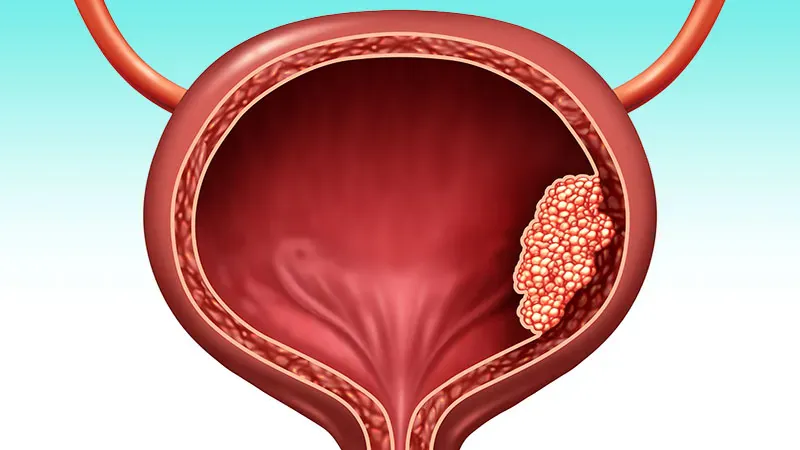
A large international registry study found that transurethral cystolithotripsy cleared bladder stones in over 95% of patients and led to shorter hospital stays compared to other surgical approaches. Open surgery also achieved complete stone clearance but came with more short-term complications. The findings support tailoring surgical strategy to each patient rather than defaulting to a single "best" technique.
A global registry study spanning 31 centers across 16 countries found that the best bladder stone surgery depends heavily on the individual patient — not a one-size-fits-all approach. Researchers analyzed outcomes in 805 patients who underwent one of three surgical procedures: transurethral cystolithotripsy, percutaneous suprapubic intervention, or open surgery.
Transurethral intervention came out on top for efficiency, achieving complete stone clearance in 95.5% of patients with the shortest hospital stays and fastest catheter removal. Open surgery matched it on stone clearance (100%) but carried a significantly higher rate of short-term complications. Percutaneous suprapubic intervention lagged behind, requiring repeat procedures far more often than the other two approaches.
By the Numbers:
Why it matters: These real-world findings give urologists a clearer, evidence-based framework for choosing the right surgical route based on stone burden, patient anatomy, and local expertise — ultimately improving outcomes and reducing unnecessary repeat procedures.