Curie Brief
Turn on cookies to sign in
Signing in saves your progress to your Curie account. We can only do that with cookies on — turn them on to continue.
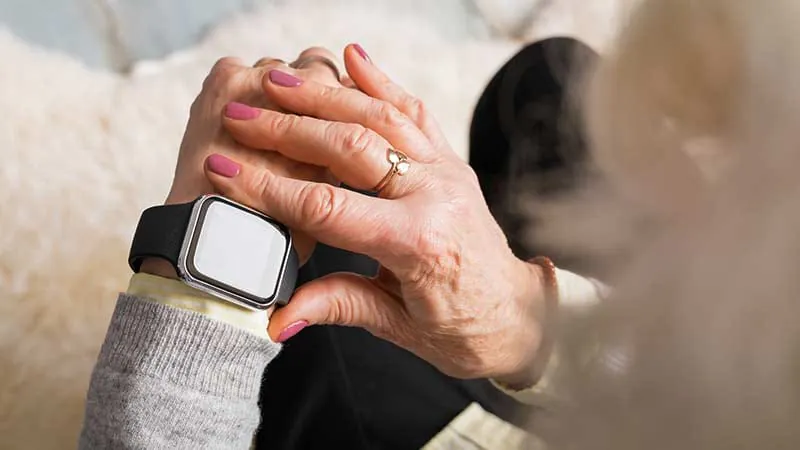
A wrist-worn device beats clinic tests at tracking stroke recovery. The Digital Arm Performance Scale (DAPS) uses a machine-learning algorithm and wrist accelerometer data to monitor upper-limb motor function in real time — and it's 40%–50% more accurate than standard clinician assessments. By capturing how patients actually move in daily life, it could help clinicians fine-tune rehab programs on the fly.
A new wrist-worn device called the Digital Arm Performance Scale (DAPS) is changing how clinicians track upper-limb recovery after stroke — and it's doing it better than traditional clinic-based tests. Developed using roughly 23,000 hours of accelerometer data from 215 participants, DAPS uses a machine-learning algorithm to continuously monitor how stroke survivors use their arms in everyday life, not just during scheduled clinic visits.
The key advantage? Real-world data. Standard assessments like the Action Research Arm Test (ARAT) and Fugl-Meyer Assessment (FMA-UE) capture a single snapshot in time, which can be skewed by fatigue or examiner encouragement. DAPS, by contrast, gives clinicians a near-real-time recovery trajectory — enabling dynamic therapy adjustments rather than waiting weeks to detect a plateau.
By the Numbers
Why it matters: Upper-limb impairment is one of the most persistent and debilitating effects of stroke. A validated, continuous, real-world monitoring tool like DAPS could accelerate rehab personalization, improve patient outcomes, and dramatically reduce the cost and size of clinical trials — a win for patients and researchers alike.