Curie Brief
Turn on cookies to sign in
Signing in saves your progress to your Curie account. We can only do that with cookies on — turn them on to continue.
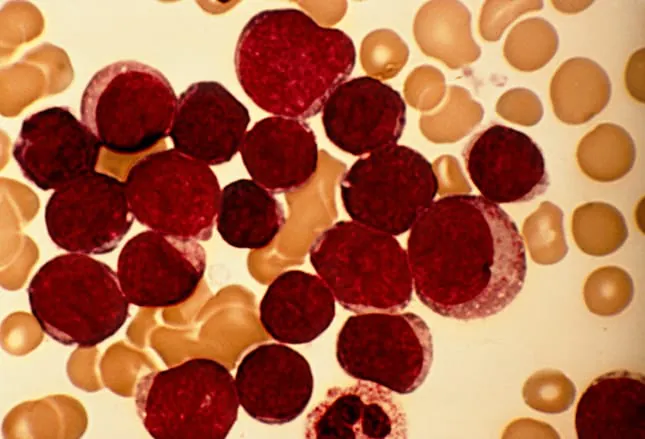
A serious liver complication after stem cell transplant may be preventable in children with relapsed leukemia. A new study found that adding defibrotide prophylaxis to inotuzumab ozogamicin (InO) treatment before transplant kept sinusoidal obstruction syndrome (SOS) rates on par with patients who never received InO — just 15% vs. 12%. Without defibrotide, SOS rates in InO-treated patients rose sharply to 50%.
Children with relapsed or refractory B-cell acute lymphoblastic leukemia (B-ALL) face a tough road — and inotuzumab ozogamicin (InO), while effective at achieving remission before stem cell transplant (HSCT), carries a known risk of sinusoidal obstruction syndrome (SOS), a potentially life-threatening liver complication. A new study from Boston Children's Hospital suggests that defibrotide prophylaxis can largely neutralize that risk.
Researchers reviewed outcomes in 92 young patients who underwent HSCT between 2016 and 2024. Among those who received both InO and defibrotide prophylaxis, the SOS rate was just 15% — nearly identical to the 12% seen in patients who never received InO. Among InO-treated patients who did not receive defibrotide, however, SOS rates rose to 50%.
Why it matters: For pediatric oncologists, this study offers a practical, potentially practice-changing insight — defibrotide prophylaxis appears to be a critical safeguard when using InO before HSCT, helping make a powerful but risky treatment considerably safer for some of the most vulnerable patients.