Curie Brief
Turn on cookies to sign in
Signing in saves your progress to your Curie account. We can only do that with cookies on — turn them on to continue.
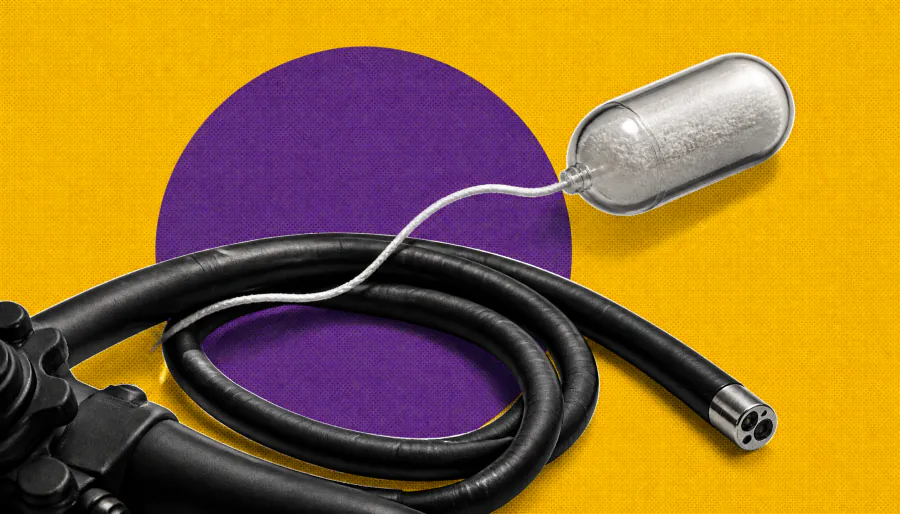
A new DNA methylation test using a capsule-sponge device detected Barrett's esophagus with 90% sensitivity — and hit 100% sensitivity for dysplasia and esophageal cancer. Presented at ACG 2026, the DETECT-ME trial results suggest this minimally invasive tool could finally close the massive screening gap, since 90% of Barrett's cases currently go undiagnosed.
A novel DNA methylation test paired with the EndoSign capsule-sponge device is showing impressive results in detecting Barrett's esophagus (BE) — a precancerous condition that remains undiagnosed in roughly 90% of those who have it. Data from the DETECT-ME trial, presented at the ACG Annual Scientific Meeting, found the test achieved 90% sensitivity and 86% specificity for BE overall, with performance climbing even higher for more advanced disease.
The multicenter study enrolled 324 patients across 18 sites. Crucially, the test hit 100% sensitivity for dysplasia and esophageal adenocarcinoma, meaning it missed none of the highest-risk cases. Researchers also noted that detection improved significantly with each centimeter increase in BE segment length, and the device was well tolerated — 82% of participants rated tolerability as excellent.
With 30–32 million Americans potentially eligible for BE screening and 90% of cases currently undetected, this non-endoscopic test could serve as a frontline primary care tool — directing only high-risk, test-positive patients to endoscopy and potentially reducing esophageal adenocarcinoma mortality through earlier detection.