Curie Brief
Turn on cookies to sign in
Signing in saves your progress to your Curie account. We can only do that with cookies on — turn them on to continue.
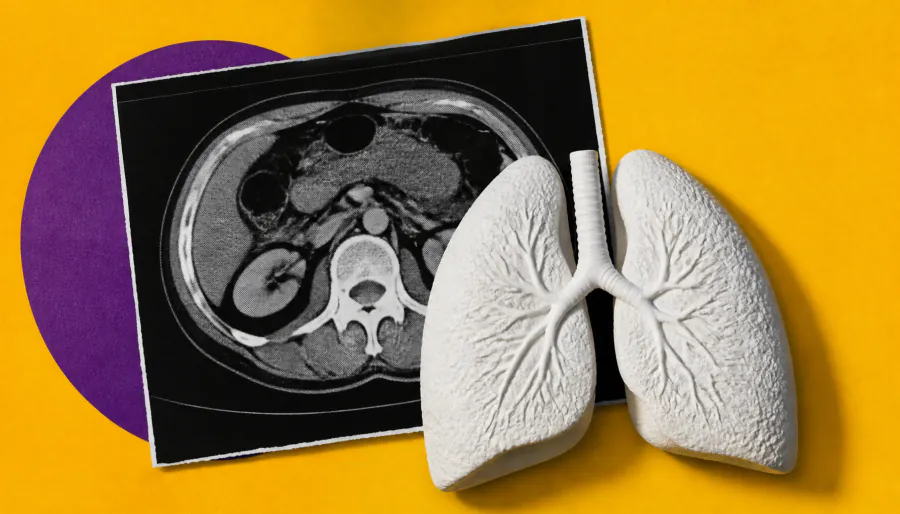
Forget BMI — belly fat may be the real lung cancer culprit. A new study found that higher total fat area around the lumbar spine, not overall body weight, is strongly linked to increased non-small cell lung cancer risk. Researchers believe excess central fat suppresses immune defenses in the airways, creating an environment where cancer can take hold.
BMI has long been considered a go-to measure of obesity-related health risk, but a new study published in the Journal of Thoracic Oncology suggests it's a poor predictor of lung cancer risk. Instead, researchers found that total fat area (TFA) — specifically fat measured at the lumbar 1 vertebral level on CT imaging — is a much stronger indicator.
The retrospective case-control study of 1,170 individuals (594 with early-stage non-small cell lung cancer and 576 high-risk controls) found no significant difference in average BMI between the two groups. However, patients with lung cancer had notably higher TFA. Further analysis of airway gene expression and mouse models pointed to a key mechanism: excess central fat appears to suppress immune activity in the airways, particularly T cell function, potentially enabling tumor development.
Why it matters: These findings help explain the so-called "obesity paradox" — why high BMI hasn't consistently predicted lung cancer risk. Central adiposity, not overall weight, may be the missing link, and incorporating TFA into future lung cancer screening and risk models could improve early detection efforts.