Curie Brief
Turn on cookies to sign in
Signing in saves your progress to your Curie account. We can only do that with cookies on — turn them on to continue.
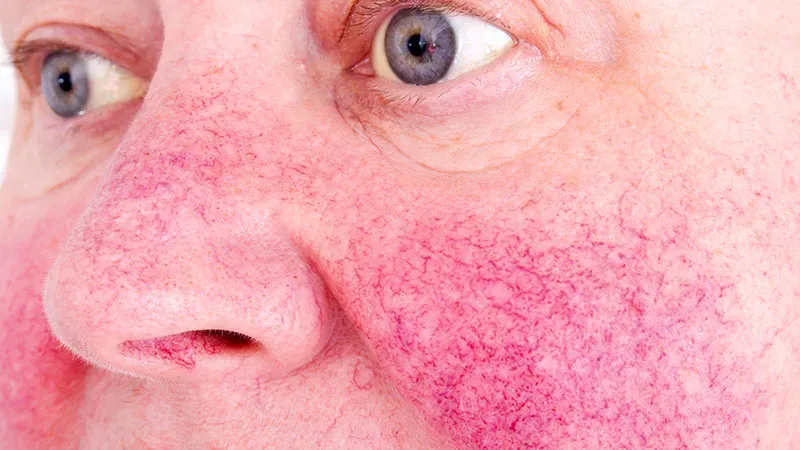
Adding ear acupressure to standard rosacea therapy nearly doubles treatment success rates. A randomized trial found that targeting the auricular branch of the vagus nerve with seed-based acupressure improved clinical outcomes and reduced inflammatory biomarkers compared to sham treatment. The low-cost, device-free add-on had a number needed to treat of just five.
A new randomized trial published in JAMA Dermatology found that adding auricular (ear) acupressure to standard rosacea therapy significantly improved outcomes. In the study of 204 patients in China, those who received active acupressure — using a small seed taped to vagus nerve-innervated areas of the ear — were far more likely to achieve treatment success than those who received sham acupressure, all while on the same first-line drug regimen of doxycycline and azelaic acid.
The intervention worked on two fronts: providing immediate vascular relief and driving longer-term reductions in neuroimmune inflammatory markers. Patients in the active group also reported faster improvements in quality of life and perceived stress scores.
By the Numbers
Why it matters: Rosacea flares are notoriously difficult to manage quickly with standard drugs alone. This safe, inexpensive, on-demand intervention could fill a real gap — offering patients faster relief while their medications take effect.