Curie Brief
Turn on cookies to sign in
Signing in saves your progress to your Curie account. We can only do that with cookies on — turn them on to continue.
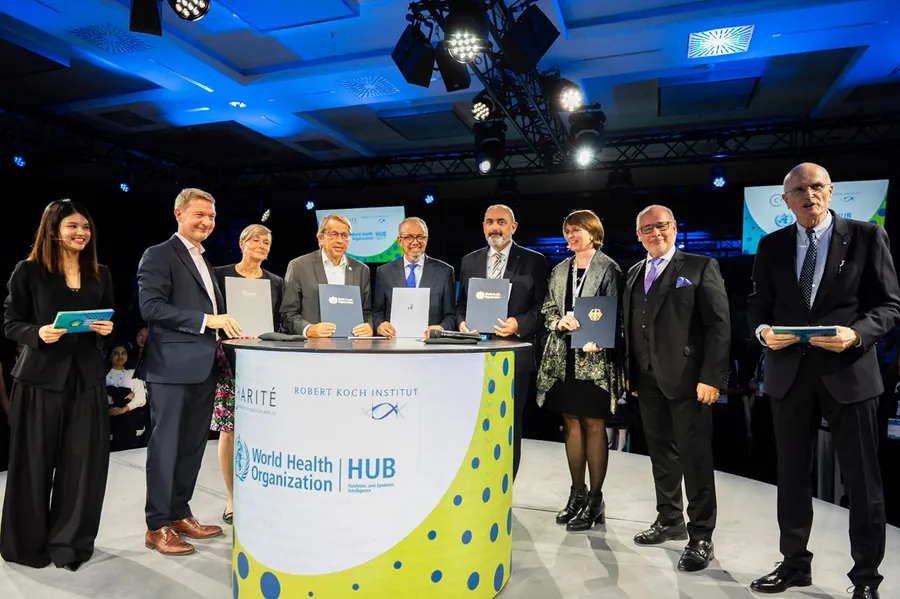
The WHO has unveiled a new five-year strategy for its Hub for Pandemic and Epidemic Intelligence, with an ambitious goal of enabling every country to detect emerging health threats within 24 hours by 2030. Built on lessons from COVID-19, the plan spans five key initiatives — from AI-powered outbreak scanning to genomic surveillance — and involves 160 member states and 190 partner organizations.
The WHO just raised the bar on global outbreak preparedness. Launched at the World Health Summit in Berlin, the organization's new five-year strategy for its Hub for Pandemic and Epidemic Intelligence sets a clear target: by 2030, every country should be able to detect and understand emerging health threats within 24 hours of their appearance. The Hub was created in 2021 in the wake of COVID-19 and has since grown into a cornerstone of global health security.
The strategy is built around five priority initiatives designed to close the gaps that let outbreaks spiral into pandemics. These range from AI-driven open-source intelligence scanning to genomic sequencing networks, data science collaboratories, national surveillance system-building, and new secure digital infrastructure for cross-border data sharing.
By the Numbers:
Why it matters: Faster outbreak detection means faster containment — and potentially the difference between a local health scare and a global pandemic. This strategy signals a major, coordinated push to make 24-hour threat detection the new global standard.