Curie Brief
Turn on cookies to sign in
Signing in saves your progress to your Curie account. We can only do that with cookies on — turn them on to continue.
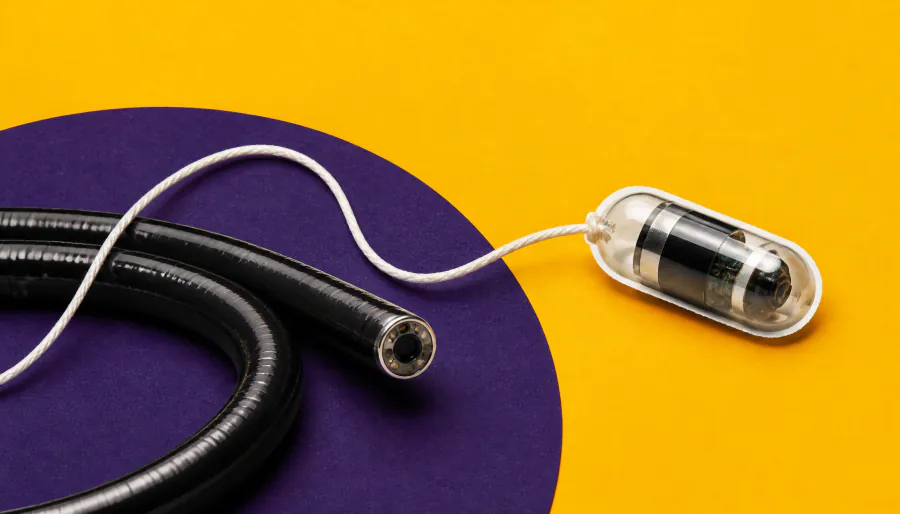
A simple capsule-on-a-string could replace frequent invasive endoscopies for monitoring eosinophilic esophagitis (EoE). A new study found the esophageal string test (EST) successfully assessed disease activity in 22 adults with zero adverse events. The minimally invasive, outpatient procedure requires no sedation and no endoscopist — a potential game-changer for patients managing this chronic condition.
Managing eosinophilic esophagitis (EoE) currently means repeat invasive endoscopies — sometimes every 8 to 12 weeks — to monitor how well treatment is working. But a new study published in Annals of Allergy, Asthma & Immunology suggests a far gentler option: the esophageal string test (EST), where patients swallow a small capsule attached to a string that collects esophageal samples over about an hour, with no sedation or endoscopist required.
Researchers at Scripps Clinic studied 22 adults with established EoE who completed 42 ESTs between February 2024 and April 2026. Every patient completed the procedure with no adverse events recorded. EST results also guided real clinical decisions — helping clinicians escalate therapy when disease remained active and directing food reintroduction when disease was inactive.
By the Numbers:
Why it matters: For EoE patients — especially those on dietary elimination therapies requiring frequent reassessment — repeated endoscopies are burdensome and costly. EST offers a practical, lower-burden monitoring tool, though it is not a replacement for endoscopy when establishing a diagnosis or capturing full visual data.