Curie Brief
Turn on cookies to sign in
Signing in saves your progress to your Curie account. We can only do that with cookies on — turn them on to continue.
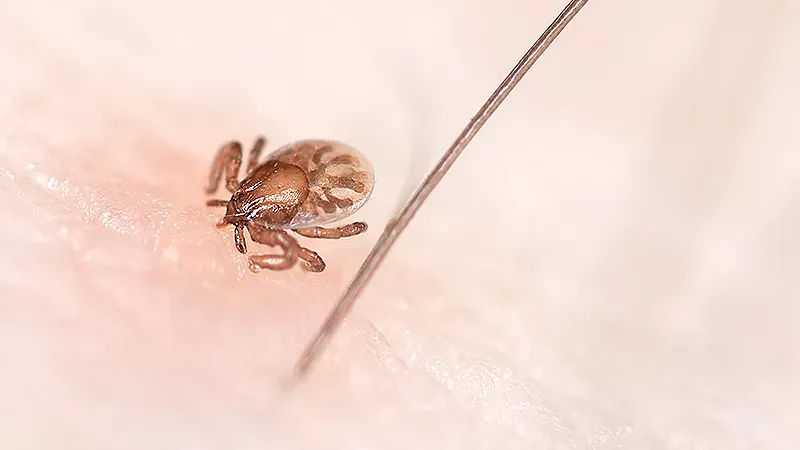
Tick-borne trouble, meet your match. A phase 3 trial found the investigational LB6V Lyme disease vaccine safe and well tolerated in children aged 5–17, with serious adverse events occurring at similar rates in vaccine and placebo groups. Developed by Valneva and Pfizer, the vaccine could be the first licensed Lyme disease shot in the US since LYMErix was pulled from the market in 2002.
A phase 3 randomized controlled trial presented at the AAP 2026 National Conference found that the investigational LB6V Lyme disease vaccine — developed by Valneva and Pfizer — was safe and well tolerated in children aged 5–17. Most side effects were mild to moderate (think injection site pain, fatigue, and headache), and serious adverse events were rare and statistically similar between the vaccine and placebo groups.
LB6V works by prompting the human immune system to produce antibodies against the OspA protein found on Borrelia burgdorferi — the bacteria behind Lyme disease. Notably, those antibodies target the tick itself: when an infected tick feeds on a vaccinated person, it ingests the antibodies, which neutralize the bacteria before they can enter the host. The vaccine covers six OspA serotypes (vs. one in the now-withdrawn LYMErix), making it potentially effective across both North America and Europe.
By the Numbers:
Why it matters: Children aged 5–14 have the highest US incidence of Lyme disease, yet no licensed vaccine has existed since 2002. If approved by the FDA and recommended by ACIP — which would trigger coverage under the National Vaccine Injury Compensation Program — LB6V could finally offer meaningful protection for the most at-risk age group.