Curie Brief
Turn on cookies to sign in
Signing in saves your progress to your Curie account. We can only do that with cookies on — turn them on to continue.
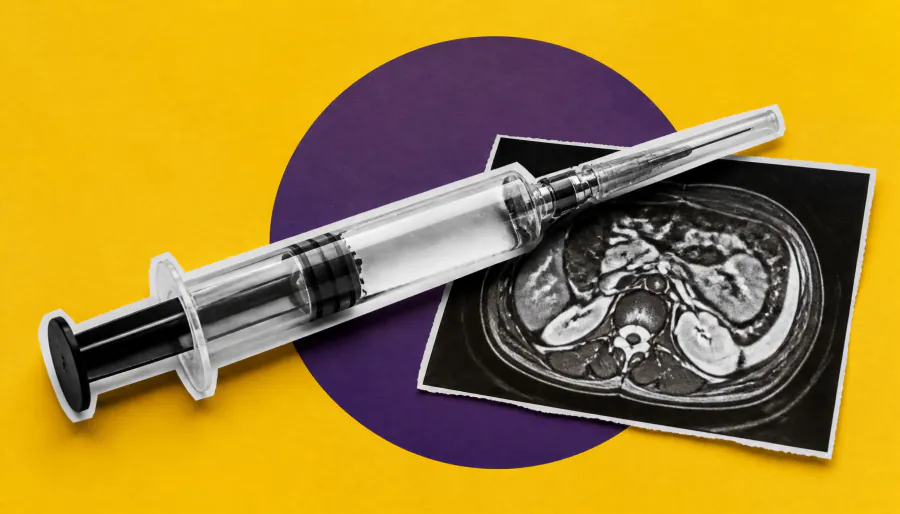
A new experimental injection, CBL-514, triggers fat cells to self-destruct and significantly reduces dangerous visceral fat in early human trials. The drug also showed potential in animal studies to curb weight regain after stopping GLP-1 medications like Ozempic. Phase 3 trials are now underway, with initial results expected next year.
An experimental injection called CBL-514 is turning heads in the obesity treatment world. Rather than shrinking fat cells, it triggers them to self-destruct through a natural process called apoptosis — and early human trials suggest it can meaningfully reduce both subcutaneous fat (the kind you can pinch) and visceral fat (the deeper, more dangerous kind surrounding internal organs). The drug was presented at the 2026 EASD Annual Meeting in Milan by researchers from Caliway Biopharmaceuticals and the University of Alabama at Birmingham.
In a pooled analysis of two phase 2 trials, participants with BMIs of 22–30 received injections every three weeks for up to 12 weeks. MRI scans tracked changes in visceral fat volume — and the results were striking. Meanwhile, animal studies hint that combining CBL-514 with GLP-1 drugs like tirzepatide could help prevent the weight regain that plagues many patients after stopping those medications.
By the Numbers:
Why it matters: Visceral fat is a key driver of insulin resistance, type 2 diabetes, and cardiovascular disease — and current surgical options like liposuction don't touch it. If phase 3 trials confirm these results, CBL-514 could offer a non-surgical, dual-action approach to obesity treatment that goes beyond aesthetics to deliver real metabolic health benefits.