Curie Brief
Turn on cookies to sign in
Signing in saves your progress to your Curie account. We can only do that with cookies on — turn them on to continue.
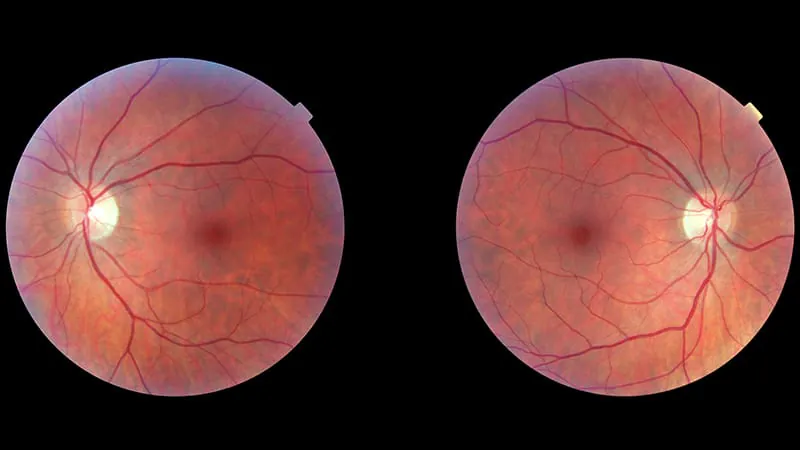
Patients with treatment-resistant neovascular AMD who switched from aflibercept to faricimab saw meaningful improvements over three years. A UK study found that treatment intervals nearly doubled, retinal fluid resolved in more than half of eyes, and visual acuity was preserved — all with very few complications.
For patients with neovascular age-related macular degeneration (nAMD) who weren't responding well to aflibercept, switching to faricimab appears to be a game-changer. A UK retrospective study tracking 133 eyes over nearly three years found that the switch led to sustained anatomical improvements, fewer injections, and stable vision — a meaningful win for a tough-to-treat population.
After switching, patients followed a personalized treat-and-extend approach. Retinal fluid — a key marker of disease activity — cleared up significantly, and the average time between injections nearly doubled. Serious eye-related complications were rare across nearly 2,700 injections.
By the Numbers:
Why it matters: For patients stuck on frequent injections with persistent fluid, this data suggests faricimab could offer a real path to better disease control and fewer clinic visits — improving quality of life without sacrificing vision.