Curie Brief
Turn on cookies to sign in
Signing in saves your progress to your Curie account. We can only do that with cookies on — turn them on to continue.
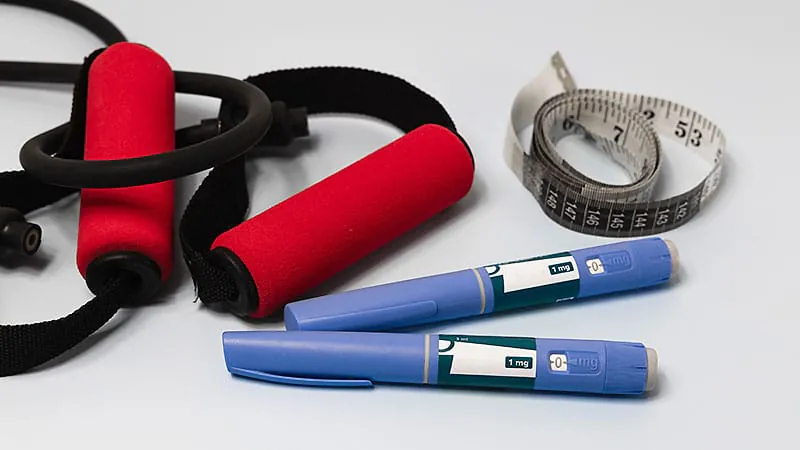
GLP-1 drugs like semaglutide are great for weight loss, but they also strip away muscle — a real problem for long-term health. A new phase 2 trial found that trevogrumab, an antimyostatin drug, significantly reduced lean mass loss during semaglutide treatment and helped restore it after the drug was stopped. The results are being called "encouraging" by experts, though questions about functional outcomes remain.
GLP-1 receptor agonists like semaglutide have transformed obesity treatment, but they come with a notable drawback: up to 45% of the weight lost can come from lean muscle mass, raising concerns about sarcopenia, frailty, and falls. Worse, when patients stop the drug, the weight that returns is mostly fat — leaving them in a worse body composition than before. Enter trevogrumab, an investigational antimyostatin monoclonal antibody from Regeneron designed to block the protein that suppresses muscle growth.
In the phase 2 COURAGE trial, trevogrumab significantly reduced lean mass loss during semaglutide treatment and — notably — helped restore lean mass after semaglutide was discontinued. Patients with lower lean mass at baseline saw even greater benefits from the combination. The drug was generally well tolerated, with no meaningful changes in metabolic markers like cholesterol or A1c, though muscle spasms were more common at higher doses.
By the Numbers:
Why it matters: As GLP-1 use rises globally, preserving muscle quality — not just achieving weight loss — is becoming a critical clinical priority. Trevogrumab could offer a meaningful solution, especially for older patients or those already at risk for sarcopenia. Experts note that functional outcomes, not just mass measurements, still need to be studied before the full picture is clear.