Curie Brief
Turn on cookies to sign in
Signing in saves your progress to your Curie account. We can only do that with cookies on — turn them on to continue.
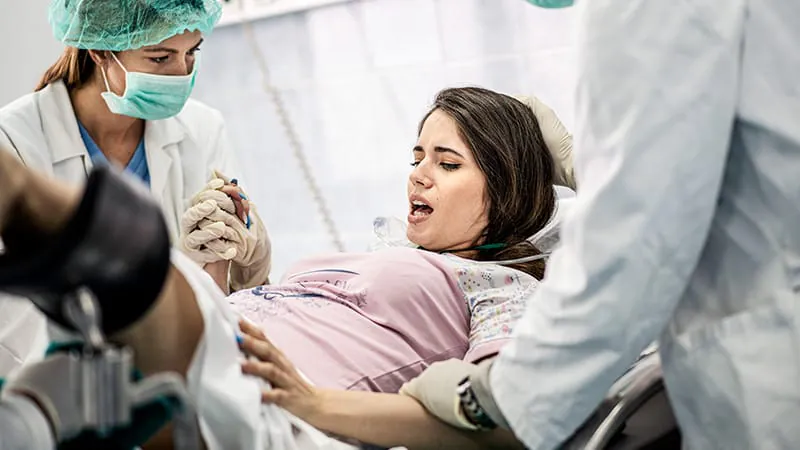
A simple repositioning maneuver during labor didn't deliver the hoped-for results. A randomized trial of over 1,200 first-time mothers found that extending the hips at crowning — rather than keeping them flexed — did not significantly reduce the rate of perineal lacerations or anal sphincter injuries. However, deeper analysis suggested the maneuver may still shift the severity of tears toward less serious outcomes.
Researchers hoped a simple leg-lowering maneuver during vaginal delivery could spare first-time mothers from painful perineal tears — but a large randomized trial suggests it's not that straightforward. The study, published in Obstetrics & Gynecology, enrolled 1,206 nulliparous women at a Boston tertiary care center and found no significant difference in perineal lacerations (second-degree or higher) between women who extended their hips at crowning (66.6%) versus those who kept them flexed in the usual position (66.2%).
Rates of obstetric anal sphincter injuries were also similar between groups. Notably, 25% of women assigned to the hip-extension group ended up delivering with hips flexed — often those with longer labors or operative deliveries — complicating the interpretation of results.
By the Numbers:
Why it matters: While the primary trial result was neutral, ordinal analyses suggest hip extension may reduce the severity of perineal trauma. Researchers believe a larger, more adherent study — focused on spontaneous deliveries — could clarify whether this low-cost positioning maneuver has a meaningful role in protecting birthing patients.