Curie Brief
Turn on cookies to sign in
Signing in saves your progress to your Curie account. We can only do that with cookies on — turn them on to continue.
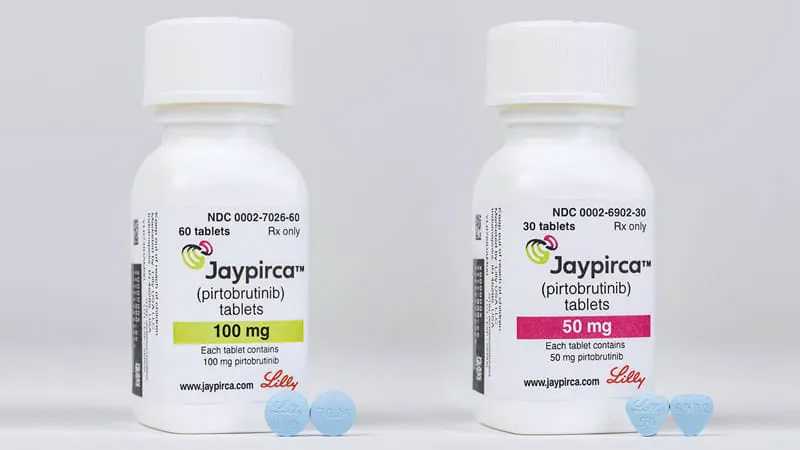
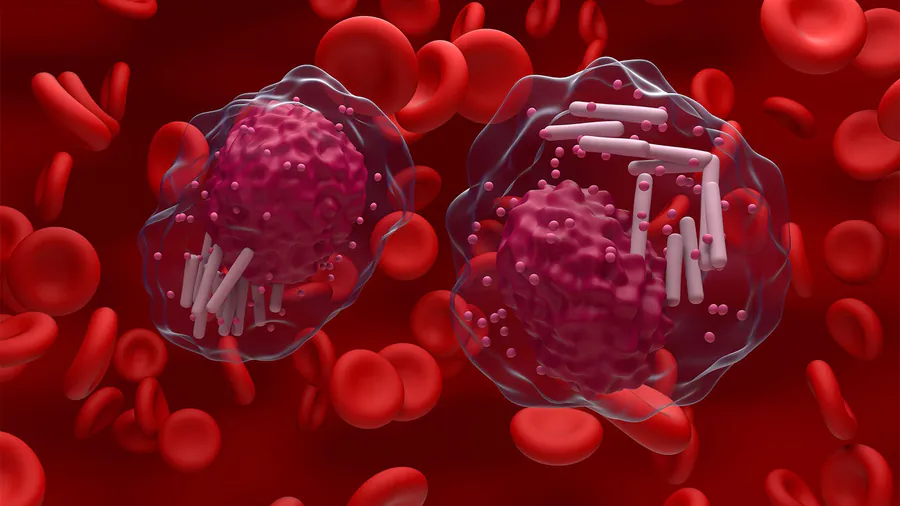
The FDA has approved pirtobrutinib (Jaypirca) as an initial treatment option for adults with chronic lymphocytic leukemia (CLL) or small lymphocytic lymphoma (SLL) without a 17p deletion. The approval was backed by the phase 3 BRUIN CLL-313 trial, which showed an 80% reduction in the risk of disease progression or death compared to standard chemoimmunotherapy. As the only noncovalent BTK inhibitor approved in this space, pirtobrutinib may overcome resistance seen with older BTK inhibitors.
The FDA has expanded the approval of pirtobrutinib (Jaypirca, Eli Lilly) to include first-line treatment of adults with CLL or SLL who have no known 17p deletion — a significant step forward for a drug previously reserved for heavily pretreated patients. Pirtobrutinib now joins covalent BTK inhibitors acalabrutinib, zanubrutinib, and ibrutinib as front-line options, but with a key distinction: its noncovalent, reversible binding mechanism allows it to retain activity against BTK mutations that commonly drive resistance to those older agents.
The approval was based on the phase 3 BRUIN CLL-313 trial, which randomized 282 treatment-naive patients (without 17p deletion) to either pirtobrutinib or bendamustine plus rituximab (BR). At a median follow-up of 28 months, pirtobrutinib significantly outperformed BR, with median PFS not yet reached versus 33.5 months in the BR arm.
By the Numbers:
Why it matters: Since many CLL/SLL patients today may only receive one or two lines of therapy — due to age or comorbidities — getting the first treatment right is critical. Pirtobrutinib's unique mechanism and strong efficacy data give clinicians a compelling new first-line tool, especially for patients at risk of developing resistance to existing BTK inhibitors.