Curie Brief
Turn on cookies to sign in
Signing in saves your progress to your Curie account. We can only do that with cookies on — turn them on to continue.
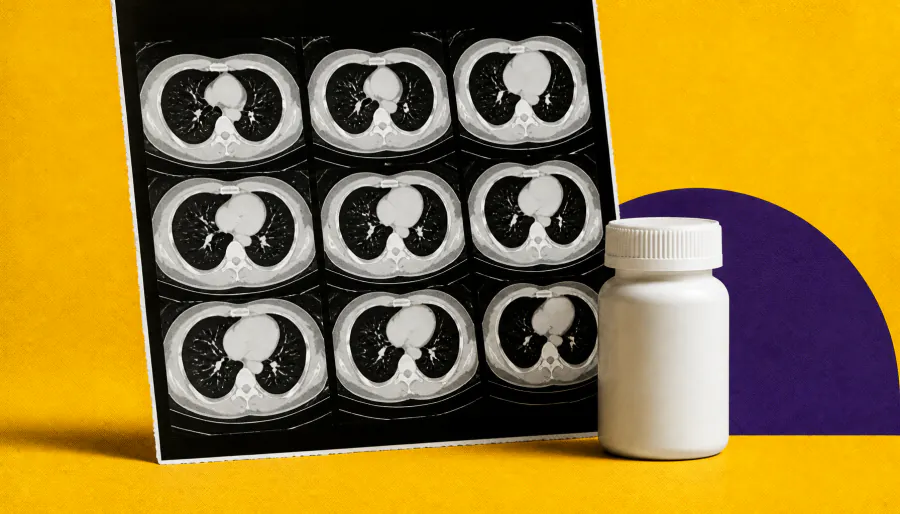
Interstitial lung disease (ILD) is common in systemic sclerosis (SSc), affecting up to 90% of patients to some degree — but only 15–20% will progress. Experts recommend mycophenolate mofetil as the go-to first-line treatment, with options like nintedanib, tocilizumab, and rituximab in the mix for tougher cases. Still, major questions remain about combination therapy and when to deploy newer agents.
Interstitial lung disease (ILD) is one of the most serious complications of systemic sclerosis (SSc), and while treatment options are slowly coming into focus, significant gaps remain. At the Congress of Clinical Rheumatology West, Dr. Laura Hummers of Johns Hopkins urged clinicians to screen every SSc patient for ILD at diagnosis — using baseline pulmonary function tests and high-resolution CT scans — since the condition may affect up to 90% of patients in some form.
The good news: only 15–20% of SSc-ILD patients will progress. The challenge is identifying who that subset is. Higher-risk groups include Black patients, those with specific autoantibodies (Scl70, U1RNP, U3RNP, Th/To), patients with diffuse skin disease, and those within the first five years of SSc diagnosis.
Key Takeaways:
Why it matters: SSc-ILD remains a leading cause of morbidity and mortality in scleroderma patients. With several clinical trials in the pipeline, the treatment landscape is evolving — but clinicians need clearer guidance on combination strategies and patient selection to make the most of emerging options.