Curie Brief
Turn on cookies to sign in
Signing in saves your progress to your Curie account. We can only do that with cookies on — turn them on to continue.
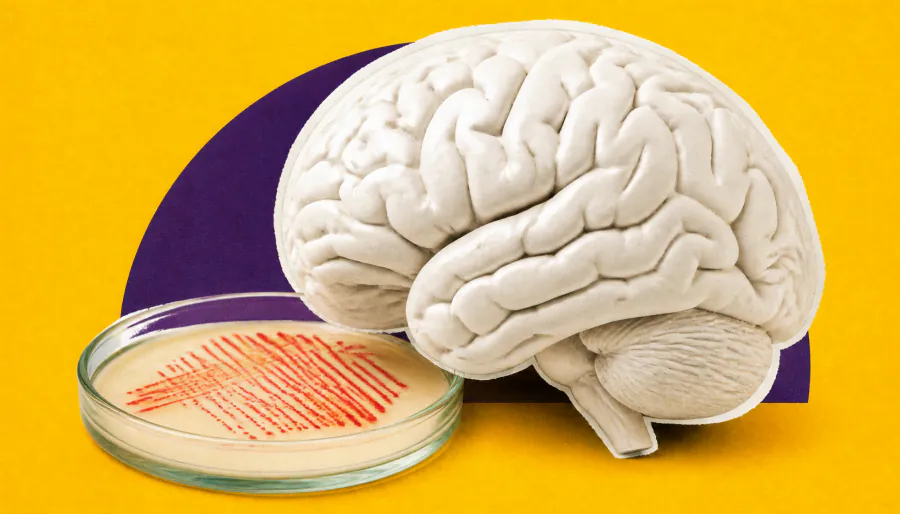
A UCLA study finds that gut bacteria and their chemical byproducts are linked to the pace of brain aging — even in healthy adults. People whose brains appeared "older" than their actual age showed worse memory, focus, and mood. Researchers say biological signs of brain aging may be detectable decades before symptoms emerge, pointing to the gut as a potential target for prevention.
A new UCLA study published in eBioMedicine suggests your gut microbiome may offer early clues about how quickly your brain is aging — and the signals could show up decades before any noticeable cognitive decline. Researchers analyzed brain scans from nearly 1,500 adults, using a model that estimates "brain age" based on how different brain regions communicate at rest. The gap between estimated and actual age was dubbed the Brain Aging Index (BAI).
Across all study groups, participants with a higher BAI — meaning their brains looked older than expected — performed worse on tests of working memory and executive function, and reported more symptoms of depression. For one group, stool samples revealed that a higher BAI was also linked to specific gut bacteria, fat molecules, a cholesterol-related compound, and lower levels of the hormone estetrol.
Key Takeaways:
Why it matters: This research shifts the conversation around cognitive decline from reactive to proactive. If gut microbiome markers can flag accelerated brain aging in otherwise healthy adults, clinicians may one day have a non-invasive, early-warning tool — and a new therapeutic target — to help preserve brain health across the lifespan.