Curie Brief
Turn on cookies to sign in
Signing in saves your progress to your Curie account. We can only do that with cookies on — turn them on to continue.
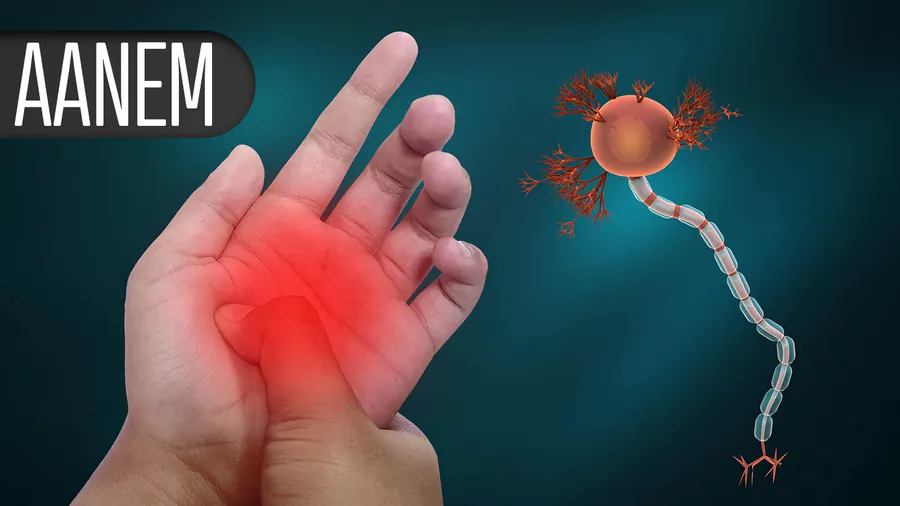
A rare muscle disease may finally have a disease-modifying treatment on the horizon. Investigational drug z-basivarsen showed sustained improvements in muscle function, strength, and disease burden in patients with myotonic dystrophy type 1 (DM1) over 12 months in the phase I/II ACHIEVE trial. With no approved therapies currently available, these results are fueling optimism ahead of a phase III trial now underway.
For people living with myotonic dystrophy type 1 (DM1), treatment options have long been limited to managing symptoms — but that could be changing. Investigational drug zeleciment basivarsen (z-basivarsen) demonstrated sustained improvements in hand myotonia, motor function, and muscle strength over 12 months in a pooled-dose group of 26 DM1 patients from the phase I/II ACHIEVE trial, presented at the American Association of Neuromuscular and Electrodiagnostic Medicine (AANEM) meeting.
Compared to both a placebo group and a natural history cohort of untreated DM1 patients, z-basivarsen-treated participants showed clear divergence across every reported endpoint by the 12-month mark. The drug also maintained a favorable safety profile, with no serious treatment-related adverse events identified.
Why it matters: DM1 is a progressive, rare genetic disorder with no approved disease-modifying therapies. Z-basivarsen works by targeting the toxic RNA at the root of the disease — a novel mechanism that, if confirmed in the ongoing phase III HARMONIA trial, could represent a landmark shift in how DM1 is treated.