Curie Brief
Turn on cookies to sign in
Signing in saves your progress to your Curie account. We can only do that with cookies on — turn them on to continue.
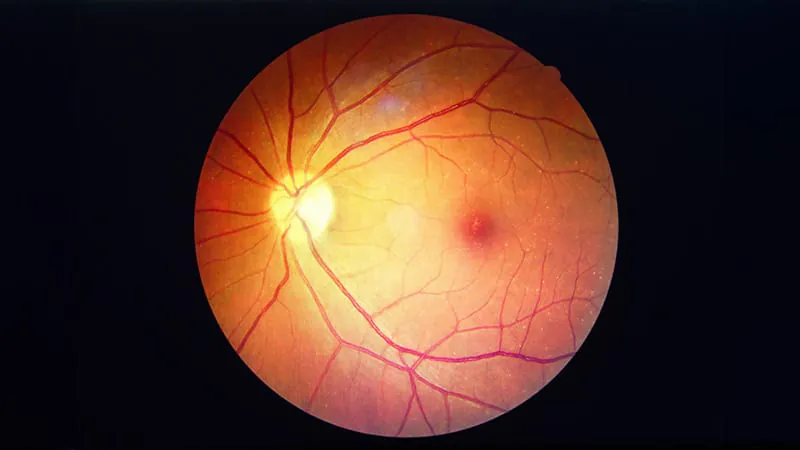
Retinal nerve cell loss linked to blood sugar levels below prediabetes cutoff. A large UK Biobank study of over 32,000 people found that retinal thinning — a sign of neurodegeneration — begins at A1c levels as low as 5.3–5.4, well before the 5.7 threshold used to diagnose prediabetes. Researchers say this could prompt a rethink of when diabetes-related eye damage actually starts.
Retinal nerve cell loss linked to blood sugar levels below prediabetes cutoff
A major new analysis of over 32,000 UK Biobank participants suggests that retinal neurodegeneration — the loss of nerve cells in the eye — may begin at blood sugar levels far lower than current diagnostic thresholds for prediabetes or diabetes. Researchers identified a turning point at an A1c of approximately 5.4 for ganglion cell-inner plexiform layer (GCL-IPL) thinning, and as low as 5.3 for total macular thickness — both below the 5.7 A1c cutoff used to define prediabetes.
Presented at the EASD 2026 Annual Meeting in Milan, the findings challenge the long-held assumption that diabetic retinopathy is primarily a vascular disease that develops only after diabetes is established. Lead researcher Dr. Rafael Simó suggested insulin resistance may be a key driver, noting that retinal neurons express insulin receptors and that impaired insulin signaling could compromise neuronal survival.
By the Numbers
Why it matters: If retinal neurodegeneration begins this early, current screening and intervention timelines may be missing a critical window. The study raises the possibility that OCT retinal imaging could one day help flag metabolic risk before diabetes is even diagnosed — though longitudinal research is still needed to confirm causality and clinical thresholds.