Curie Brief
Turn on cookies to sign in
Signing in saves your progress to your Curie account. We can only do that with cookies on — turn them on to continue.
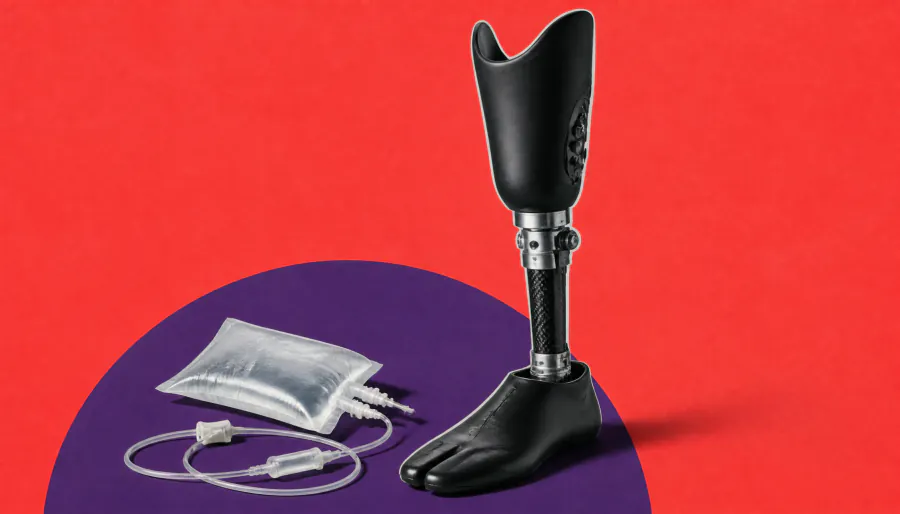
Below knee amputation comes with sobering odds — mortality climbs from 3.3% at 30 days to 17.1% at two years, a large U.S. study found. Infections, sepsis, and psychiatric diagnoses like depression and PTSD are also common post-op. Researchers say a multidisciplinary care approach — covering orthotics, occupational therapy, and mental health — is essential for these patients.
Below knee amputation is far more than a surgical event — it's a life-altering procedure with serious and lasting consequences, according to a large retrospective study presented at the American Orthopaedic Foot & Ankle Society Annual Meeting. Analyzing data from over 24,500 U.S. patients, researchers found that mortality risk climbs steadily after surgery, and complications span physical, infectious, and psychiatric domains.
Infection was the most common wound complication, while sepsis topped the list of medical complications — affecting nearly 1 in 4 patients within two years. A significant share of patients also received new psychiatric diagnoses post-amputation, underscoring the profound psychological toll of the procedure.
By the Numbers:
Why it matters: These findings make a strong case for integrated, team-based care after below knee amputation — combining orthotics, occupational therapy, and mental health support. For clinicians, it's a reminder that surgical success is just the beginning of the patient journey.