Curie Brief
Turn on cookies to sign in
Signing in saves your progress to your Curie account. We can only do that with cookies on — turn them on to continue.
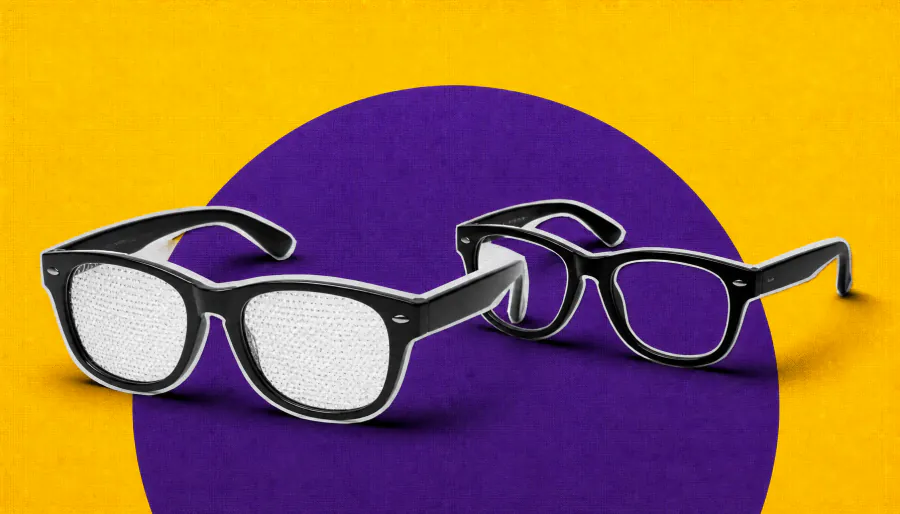
Kids wearing SightGlass DOT lenses for myopia control report a visual experience just as good as standard single vision specs. Two 2-year studies found no meaningful differences in symptoms like glare or halos, and children rated their satisfaction highly. Practitioners can prescribe DOT lenses with confidence — no need to oversell the adaptation process.
Two 2-year randomized studies presented at Academy 2026 found that children wearing SightGlass Vision Diffusion Optics Technology (DOT) lenses — designed to slow myopia progression through contrast modulation — had visual quality and subjective experiences on par with standard single vision spectacles. The findings offer reassurance to eye care practitioners looking to expand their myopia management toolkit without worrying about patient comfort trade-offs.
In the quality of vision trial (171 children, ages 6–13), researchers assessed symptoms like glare, halos, and hazy vision. Most kids reported none of these issues, and when symptoms did occur, they were mild. Notably, the only statistically significant differences found actually favored the DOT lenses. A separate subjective experience trial (172 children) showed high satisfaction scores — ranging from 70 to 83 out of 100 — with no significant gap between DOT and single vision wearers.
By the Numbers:
Why it matters: Myopia is rising globally among children, and clinicians need effective, well-tolerated interventions. These results suggest DOT lenses can be prescribed just like standard specs — with minimal adaptation concerns — making it easier for practitioners to recommend them confidently.