Curie Brief
Turn on cookies to sign in
Signing in saves your progress to your Curie account. We can only do that with cookies on — turn them on to continue.
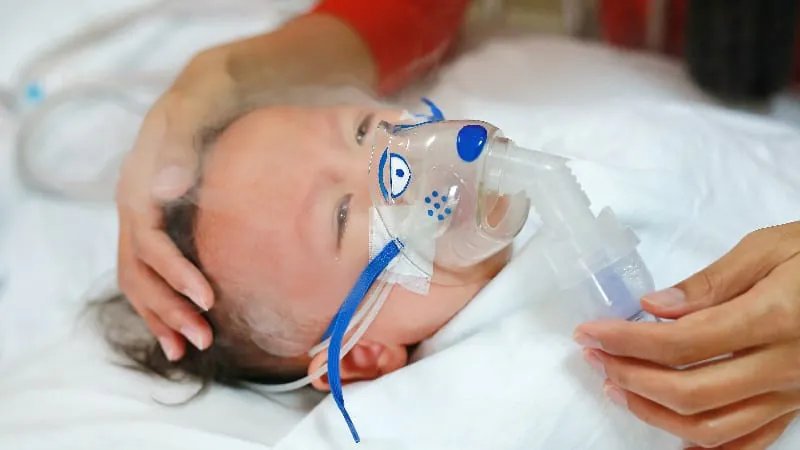
Not all RSV is created equal. A new study finds that children hospitalized for RSV subgroup B bronchiolitis before age 2 are significantly more likely to experience severe wheezing and nighttime dry cough at school age compared to those with RSV subgroup A. Asthma rates and lung function, however, were similar between the two groups.
Not all RSV is created equal
A prospective study out of Madrid, Spain, followed 185 children and adolescents (ages 5–18) who had been hospitalized for severe RSV bronchiolitis in their first two years of life. Researchers compared medium-term respiratory outcomes between those infected with RSV subgroup A (129 kids) and RSV subgroup B (56 kids) — and found some notable differences.
Children who had RSV-B bronchiolitis were significantly more likely to report severe wheezing that restricted speech and nighttime dry cough unrelated to infections at school age. RSV-B was independently associated with nighttime dry cough even after adjusting for factors like allergic rhinitis and maternal smoking. That said, current asthma rates, lung function, and allergic sensitization were similar across both groups.
By the Numbers
Why it matters: RSV-B bronchiolitis may carry a worse respiratory prognosis than RSV-A, suggesting that kids with a history of RSV-B hospitalization deserve closer monitoring and proactive symptom management in their early years to reduce long-term morbidity.