Curie Brief
Turn on cookies to sign in
Signing in saves your progress to your Curie account. We can only do that with cookies on — turn them on to continue.
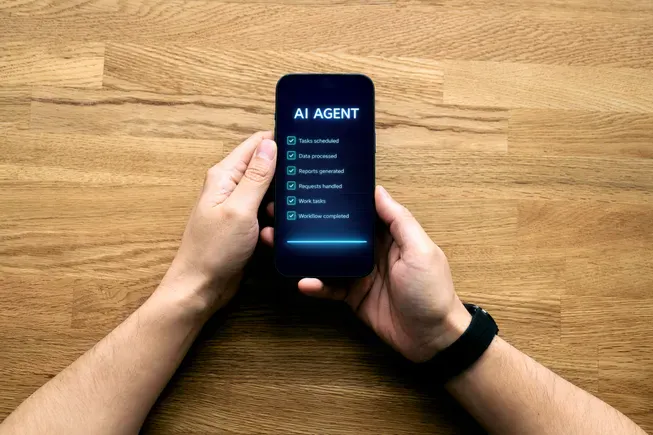
Americans are warming up to AI for general health questions, but a new survey reveals a significant trust gap when it comes to sharing personal health data. Over 70% of patients worry about privacy, bias, and AI "hallucinations," and fewer than 1 in 3 would use AI to find a doctor or navigate insurance. The takeaway: AI adoption in healthcare hinges on better governance and human oversight.
Americans are embracing AI in their daily lives — 40% use it at least once a day — but a new Wolters Kluwer survey (conducted by Ipsos, n=254 U.S. patients) reveals a clear trust gap when it comes to healthcare. While roughly 1 in 4 patients say AI prompted them to seek care sooner after researching symptoms, far fewer are willing to use it for tasks that require sharing personal health information.
The hesitation is rooted in real concerns: more than 70% of respondents worry about the privacy of their protected health information, 72% flag AI bias as a concern, and 69% are wary of AI "hallucinations" — confidently wrong outputs. Women and rural patients expressed heightened anxiety compared to other groups.
By the Numbers:
Why it matters: The survey signals that healthcare organizations can't just deploy AI — they need to earn patient trust through transparent governance, clear accountability standards, and formal oversight frameworks. Without that, even the most useful AI tools risk going unused.