Curie Brief
Turn on cookies to sign in
Signing in saves your progress to your Curie account. We can only do that with cookies on — turn them on to continue.
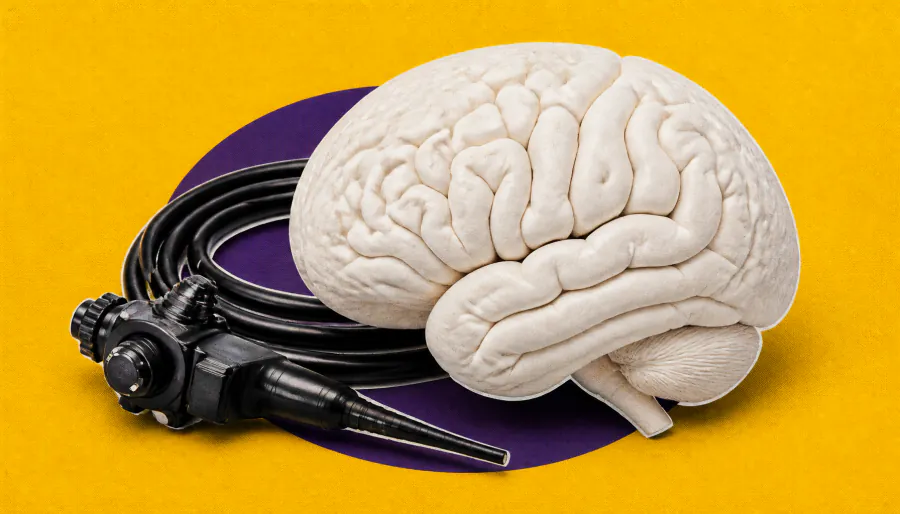
Ditching junk food could lift your mood. A small UCSF pilot study published in JAMA Psychiatry found that people who slashed their ultra-processed food intake by over 85% saw moderate to large improvements in depression symptoms. Researchers think the gut-brain connection — specifically reduced gut damage and chronic inflammation — may be a key mechanism at play.
Ditching junk food could lift your mood
A pilot study from UC San Francisco, published in JAMA Psychiatry, found that cutting ultra-processed foods dramatically — by more than 85% — led to moderate to large improvements in depression symptoms across three different measures. Anxiety scores also improved modestly. The study is believed to be the first to compare depression symptoms in the same participants before and after a major dietary shift.
The 20-person crossover study included participants with an average age of 44, high BMI, and at least one metabolic disorder. One group maintained their usual diet for four weeks while the other switched to a low ultra-processed food diet — then the groups swapped. Researchers point to a "leaky gut" hypothesis: ultra-processed foods may damage the gut lining, triggering chronic low-grade inflammation that either causes depression or increases vulnerability to it.
By the Numbers
Why it matters: While preliminary, these findings suggest diet could be a meaningful — and modifiable — lever in mental health treatment, opening the door for larger trials and new dietary counseling strategies in psychiatric and primary care settings.