Curie Brief
Turn on cookies to sign in
Signing in saves your progress to your Curie account. We can only do that with cookies on — turn them on to continue.
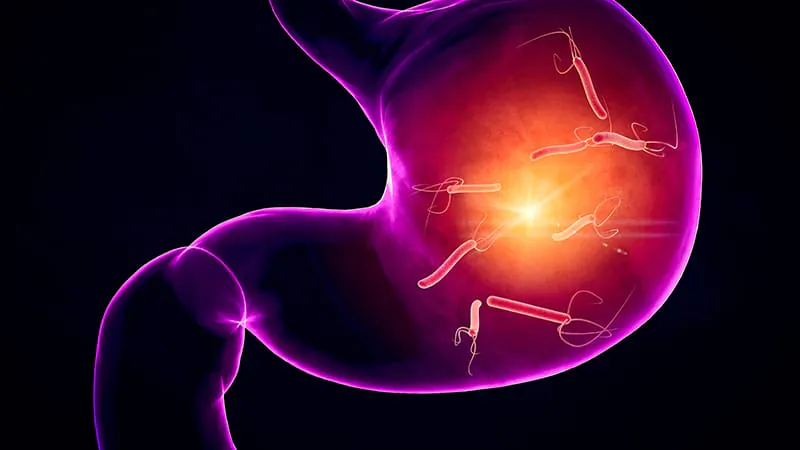
A landmark IARC study finds that 2.3 million cancer cases in 2024 — about 12% of all cancers worldwide — were caused by infections. H. pylori and HPV topped the list, together responsible for ~1.5 million cases. Experts say vaccines, screening, and treatment could prevent a large share of this burden, especially in low- and middle-income countries.
A new study from the International Agency for Research on Cancer (IARC), published in Lancet Oncology, reveals that roughly 2.3 million cancer diagnoses in 2024 — about 1 in 8 cases globally — were attributable to infections. The analysis, the most comprehensive update since 2018, examined 12 carcinogenic infectious agents and incorporated 16 newly established infection-cancer links, including HIV and Merkel cell polyomavirus.
H. pylori and HPV led the pack, together causing ~1.5 million cancers. A standout finding: Epstein-Barr virus (EBV) emerged as the fourth-leading infectious cause of cancer — ahead of hepatitis C — largely due to new evidence linking it to gastric cancer. The burden falls hardest on low- and middle-income countries, with Eastern Asia alone accounting for 42% of all infection-related cancers.
By the Numbers:
Why it matters: Many of these cancers are preventable through existing tools — HPV and hepatitis B vaccines, H. pylori testing and treatment, and HIV/hepatitis C screening. Researchers are calling for equitable scale-up of these interventions and accelerated development of new vaccines, particularly against EBV, to meaningfully reduce the global cancer burden.