Curie Brief
Turn on cookies to sign in
Signing in saves your progress to your Curie account. We can only do that with cookies on — turn them on to continue.
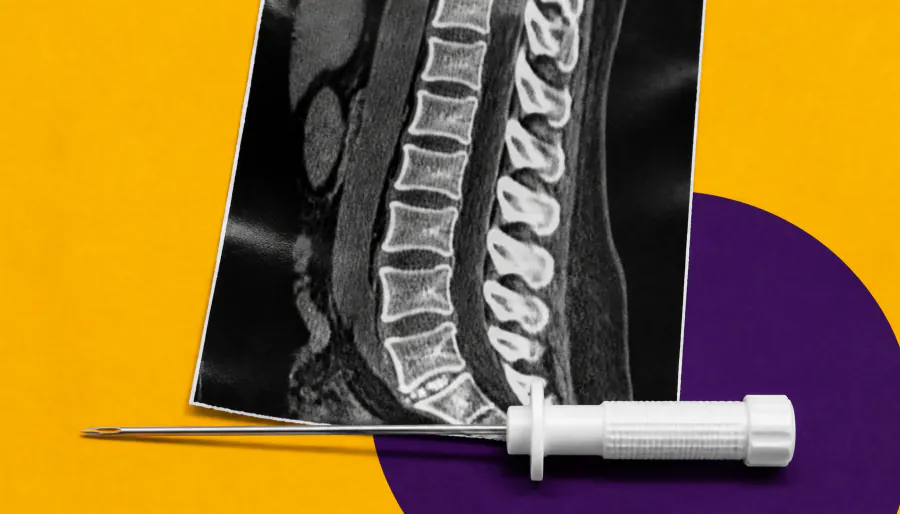
Incidental vertebral fractures spotted on CT scans are associated with a notably higher relative risk of multiple myeloma, a new Danish study finds. But the absolute 5-year risk remains modest — even in older adults with the most severe fractures. Researchers say routine myeloma screening for these patients is likely unnecessary without other red flags.
A large Danish population study published in Leukemia found that adults with incidentally detected vertebral fractures on CT scans face a significantly elevated relative risk of developing multiple myeloma — but the actual absolute risk remains low enough that routine cancer workups may not be warranted.
The study analyzed CT scans from 9,059 adults aged 40–94 in the Copenhagen General Population Study. About 17% had at least one vertebral fracture. Those with any fracture had a 3.73x higher relative risk of myeloma compared to those without; that risk jumped to nearly 5x for those with more severe (grade 2–3) fractures.
Despite the striking relative risk, the authors caution against over-reaction. They conclude that routine myeloma evaluation for incidentally found vertebral fractures is likely of "limited or no benefit" unless symptoms or other clinical findings raise suspicion.
By the Numbers:
Why it matters: As CT imaging becomes more common, incidental vertebral fractures are increasingly spotted. This study helps clinicians contextualize that finding — elevated relative risk sounds alarming, but the absolute numbers remain modest, supporting a watchful rather than aggressive diagnostic approach.