Curie Brief
Turn on cookies to sign in
Signing in saves your progress to your Curie account. We can only do that with cookies on — turn them on to continue.
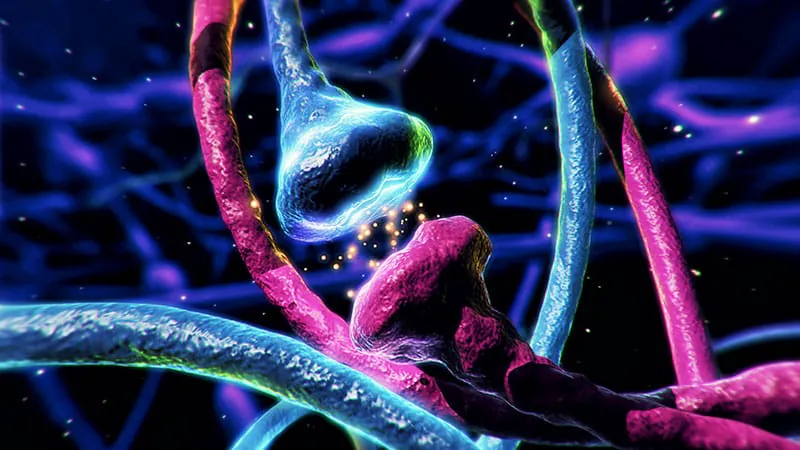
Brain scans reveal long COVID may damage dopamine neurons. A new PET imaging study found that people with long COVID had 16–20% lower levels of a key dopamine marker in the brain's striatum compared to healthy controls — and the pattern of loss mapped directly onto specific symptoms like low motivation, slowed movement, and memory problems. Existing dopamine-targeting drugs could now be repurposed as treatments.
For years, long COVID patients have described debilitating neurological symptoms — brain fog, apathy, memory loss, slowed movement — with little scientific explanation and no proven treatments. A new study published in eBioMedicine may finally offer some answers, pointing to measurable damage in the brain's dopamine system as a key culprit.
Researchers at Toronto's Brain Health Imaging Centre used PET brain imaging to measure vesicular monoamine transporter 2 (VMAT2) — a marker of dopamine neuron integrity — in 24 adults with long COVID and 24 healthy controls. They found significantly reduced VMAT2 levels across all major regions of the striatum in long COVID patients, suggesting a real loss of dopamine-releasing nerve terminals. Crucially, the pattern of loss matched patients' symptoms by brain region.
The findings open a promising new treatment avenue: existing medications that boost dopamine function — including dopamine precursors and inhibitors of dopamine metabolism — could potentially be repurposed for long COVID. A clinical trial targeting dopamine function is planned in collaboration with University Health Network.
By the Numbers
Why it matters: This study shifts long COVID brain research from symptom description to measurable biology, giving clinicians a potential mechanism to target — and patients a biological validation of their very real struggles.