Curie Brief
Turn on cookies to sign in
Signing in saves your progress to your Curie account. We can only do that with cookies on — turn them on to continue.
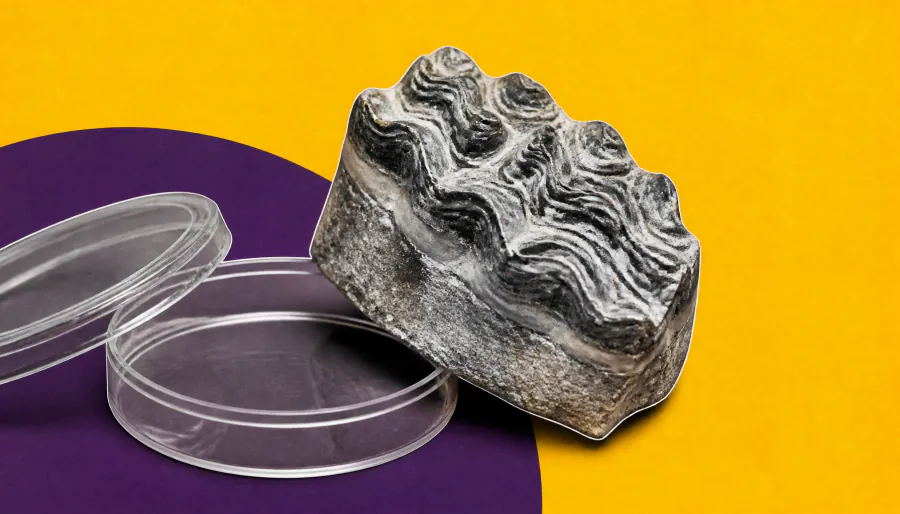
Scientists dug deep into evolutionary history — 160 million years deep — to find new weapons against drug-resistant bacteria. University of Oregon researchers reconstructed ancient antimicrobial proteins from early placental mammals and found some outperformed their modern human counterparts against dangerous pathogens. The discovery could help inspire a new generation of treatments as the antibiotic resistance crisis worsens.
Scientists at the University of Oregon have brought prehistoric biology back to life — literally. By reconstructing antimicrobial peptides from mammals that lived up to 160 million years ago, researchers found that some of these ancient proteins were more effective at killing drug-resistant bacteria than the versions found in modern humans. The findings, published in PLOS Biology, center on lactoferrin, an immune protein found in breast milk, tears, saliva, and other body fluids that fights pathogens by starving them of iron and punching holes in bacterial membranes.
Using a technique called ancestral sequence reconstruction, the team mapped lactoferrin's evolutionary history across living species and statistically estimated the genetic sequences of long-extinct ancestors. When tested against pathogens like Pseudomonas aeruginosa, Staphylococcus aureus, and E. coli, some reconstructed peptides from more recently extinct ancestors outperformed modern human versions — with just a single amino acid mutation driving a dramatic boost in potency.
Key Takeaways:
Why it matters: Antibiotic resistance is one of medicine's most urgent threats. This research opens a novel avenue — mining evolutionary history as a blueprint for designing next-generation antimicrobial therapies that pathogens may find harder to resist.