Curie Brief
Turn on cookies to sign in
Signing in saves your progress to your Curie account. We can only do that with cookies on — turn them on to continue.
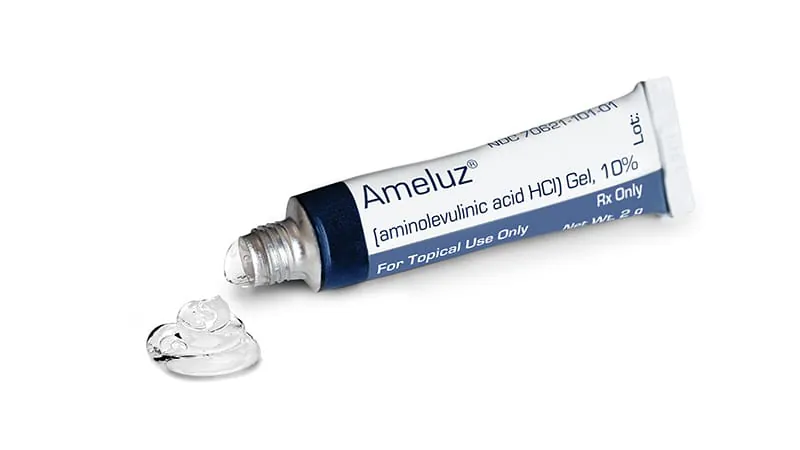
The FDA has approved Ameluz (aminolevulinic acid hydrochloride gel, 10%) combined with red light therapy for superficial basal cell carcinoma (BCC) — marking the first-ever FDA-approved photodynamic therapy (PDT) for skin cancer in the US. The approval gives dermatologists a validated nonsurgical option, especially for patients who can't or prefer not to undergo surgery. Phase 3 data showed a 66% complete response rate vs. just 5% for placebo.
The FDA has approved Ameluz (aminolevulinic acid [ALA] hydrochloride topical gel, 10%), used with Biofrontera's BF-RhodoLED lamp, for treating superficial basal cell carcinoma (BCC) in adults — a historic first for photodynamic therapy (PDT) in US skin cancer care. While ALA-based PDT has been used off-label for decades and is a standard treatment in Europe and South America, this approval gives dermatologists a formally validated, nonsurgical alternative to Mohs surgery, along with a clearer path to insurance coverage.
The approval is particularly meaningful for patients who are poor surgical candidates, have multiple lesions (such as those with Gorlin syndrome or immunocompromised patients), or simply prefer to avoid surgery. PDT works by selectively targeting metabolically active cancer cells, converting ALA into a photosensitizing agent that kills atypical cells when activated by red light.
By the Numbers:
Why it matters: This approval fills a long-standing gap in the US skin cancer toolkit, offering a precise, nonsurgical option for superficial BCC — the most common form of skin cancer — and could meaningfully expand access and treatment choices for patients who previously had limited alternatives to surgery.