Curie Brief
Turn on cookies to sign in
Signing in saves your progress to your Curie account. We can only do that with cookies on — turn them on to continue.
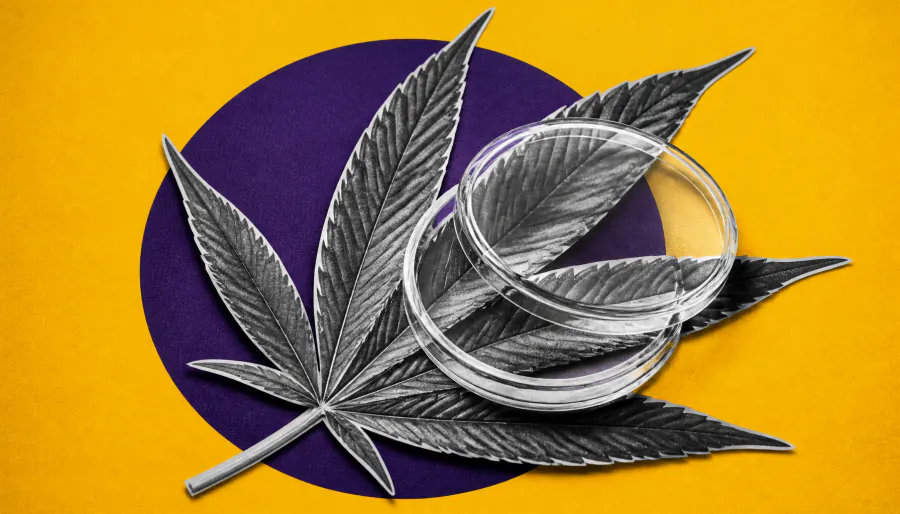
Scientists just found something unexpected hiding in cannabis leaves. Researchers at Stellenbosch University detected rare plant compounds called flavoalkaloids in cannabis for the very first time, alongside dozens of other previously unreported phenolic compounds. The discovery suggests that cannabis leaves — often discarded as waste — could be a surprisingly rich source of chemicals with antioxidant, anti-inflammatory, and anti-carcinogenic properties.
Cannabis leaves may be worth a second look — scientifically speaking.
Researchers at Stellenbosch University in South Africa have made a first-of-its-kind discovery: rare plant compounds called flavoalkaloids detected in cannabis leaves. Using advanced analytical chemistry techniques, the team identified 79 phenolic compounds across three commercially grown cannabis strains — 25 of which had never been reported in the plant before. Sixteen were tentatively identified as flavoalkaloids, a class of compounds so uncommon that their presence in cannabis came as a genuine surprise to the researchers.
The breakthrough was made possible by combining two-dimensional liquid chromatography with high-resolution mass spectrometry — a powerful pairing that separates and identifies compounds with far greater precision than conventional methods. This allowed the team to spot rare flavoalkaloids that had previously been masked by more abundant compounds in the plant's already complex chemical profile.
By the Numbers:
Why it matters: Cannabis research has long fixated on cannabinoids like THC and CBD, but this study shines a light on the plant's rich non-cannabinoid chemistry. Flavonoids and related compounds are associated with antioxidant, anti-inflammatory, and anti-carcinogenic properties — meaning cannabis leaves, currently treated as agricultural waste, could hold real promise for future biomedical research.