Curie Brief
Turn on cookies to sign in
Signing in saves your progress to your Curie account. We can only do that with cookies on — turn them on to continue.
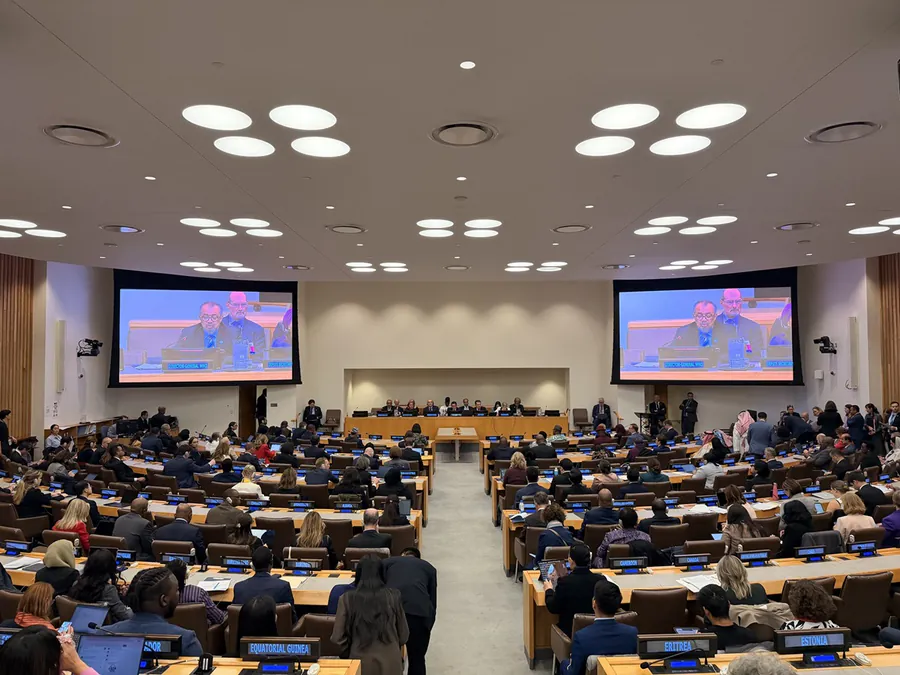
Global leaders gathered at the UN General Assembly to reaffirm their commitment to pandemic prevention, preparedness, and response (PPPR). Building on lessons from COVID-19 — which caused over 20 million excess deaths and wiped $10 trillion from the global economy — nations pledged sustained investment, stronger health systems, and equitable access to vaccines and treatments. A key priority: finalizing the WHO Pandemic Agreement's Pathogen Access and Benefit-Sharing (PABS) annex.
At the second UN General Assembly High-level Meeting on Pandemic Prevention, Preparedness and Response (PPPR), political leaders from around the world renewed their commitment to building a safer, more resilient global health system. The meeting — a follow-up to the 2023 gathering sparked by COVID-19 — emphasized that pandemic preparedness is not just a health issue; it demands a whole-of-government, whole-of-society approach.
WHO Director-General Dr. Tedros Adhanom Ghebreyesus called for continued action, noting that COVID-19 exposed deep fault lines in global health security. Leaders highlighted progress made since 2023, including the adoption of the WHO Pandemic Agreement, updates to the International Health Regulations, and the establishment of new global centers for surveillance and local vaccine manufacturing.
A major sticking point remains the finalization of the Pathogen Access and Benefit-Sharing (PABS) annex — a critical piece needed before countries can begin ratifying the WHO Pandemic Agreement, with adoption targeted for the World Health Assembly in May 2027.
By the Numbers:
Why it matters: Without a functioning global framework for sharing pathogens and benefits equitably, the world risks repeating the inequities and delays that defined the COVID-19 response. This meeting signals strong political will — but turning commitments into action will be the real test.