Curie Brief
Turn on cookies to sign in
Signing in saves your progress to your Curie account. We can only do that with cookies on — turn them on to continue.
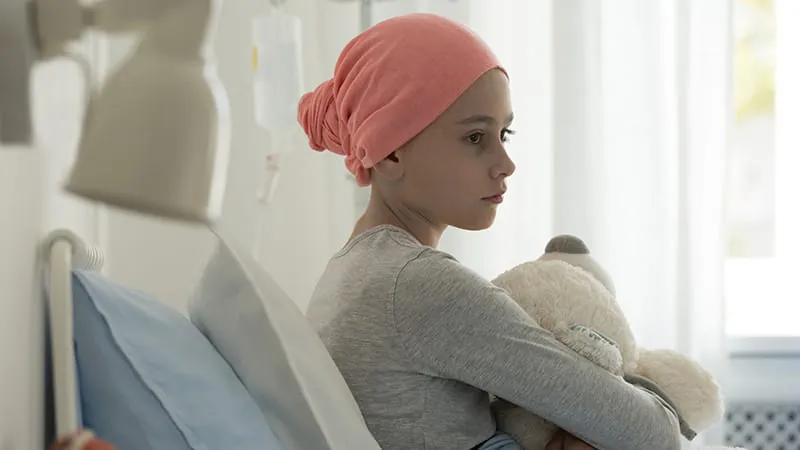
A landmark phase 3 trial shows that swapping two rounds of intensive chemotherapy for blinatumomab dramatically improved survival in children with high-risk B-cell ALL. The 4-year event-free survival jumped to 83% with blinatumomab vs. 70.3% with chemo, while treatment-related infections plummeted. The findings are poised to establish blinatumomab as a new standard of care in pediatric B-ALL.
A phase 3 trial (AIEOP-BFM ALL 2017) published in the New England Journal of Medicine found that replacing two cycles of intensive chemotherapy with two cycles of blinatumomab — a CD19-directed bispecific T-cell engager — significantly improved outcomes in children with newly diagnosed high-risk B-cell acute lymphoblastic leukemia (ALL). The trial enrolled 709 children under 18 across eight countries, randomizing them after consolidation and one intensive chemo cycle.
The results were striking: blinatumomab cut the risk of relapse nearly in half and dramatically reduced toxic side effects compared to standard chemotherapy. Editorialists from Children's Hospital of Philadelphia called the findings further evidence that blinatumomab is becoming a new standard of care in B-cell ALL — and raised the question of whether it could eventually reduce the need for stem cell transplantation in some high-risk patients.
By the Numbers:
Why it matters: High-risk pediatric B-ALL remains difficult to treat, with relapse and chemo toxicity posing major challenges. This trial offers a compelling case for immunotherapy-based de-escalation — better efficacy and a safer profile — which could reshape frontline treatment protocols for children with this aggressive cancer.