Curie Brief
Turn on cookies to sign in
Signing in saves your progress to your Curie account. We can only do that with cookies on — turn them on to continue.
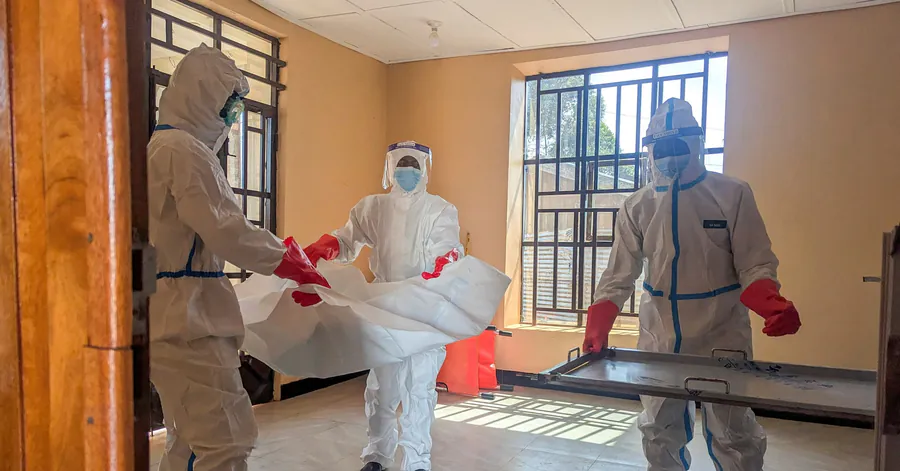
Congo's Ebola crisis is on the move. North Kivu province now accounts for roughly a third of new Ebola cases and deaths, overwhelming treatment centers as deep community mistrust hampers containment. With 7,820 confirmed cases and 3,779 deaths nationally — and no approved vaccines or treatments for this rare Bundibugyo strain — health workers warn the outbreak isn't shrinking, it's just shifting.
Congo's Ebola outbreak is proving harder to contain than ever — not just because of the virus itself, but because of where it's spreading and the challenges on the ground. North Kivu province has emerged as the new epicenter, with all 29 beds at the Kitatumba Ebola treatment center in Butembo filled this week. City authorities scrambled to open two additional treatment centers, bringing the total to four. MSF's emergency coordinator put it plainly: "The outbreak is not shrinking; it is moving."
The outbreak is caused by the rare Bundibugyo species of Ebola — unlike the more familiar Zaire strain, there are no approved vaccines or treatments. Early symptoms mimic malaria and typhoid, making detection difficult. Deep community mistrust — rooted in past outbreaks, prior misconduct by some responders, and widespread skepticism — is fueling resistance to containment efforts. Residents have attacked burial teams, burned a health post, and refused basic prevention measures, pushing the fatality rate in North Kivu well above the national average.
By the Numbers:
Why it matters: Without approved vaccines or treatments, and with a population deeply skeptical of responders, containing this outbreak depends almost entirely on trust-building — a resource that's in dangerously short supply.