Curie Brief
Turn on cookies to sign in
Signing in saves your progress to your Curie account. We can only do that with cookies on — turn them on to continue.
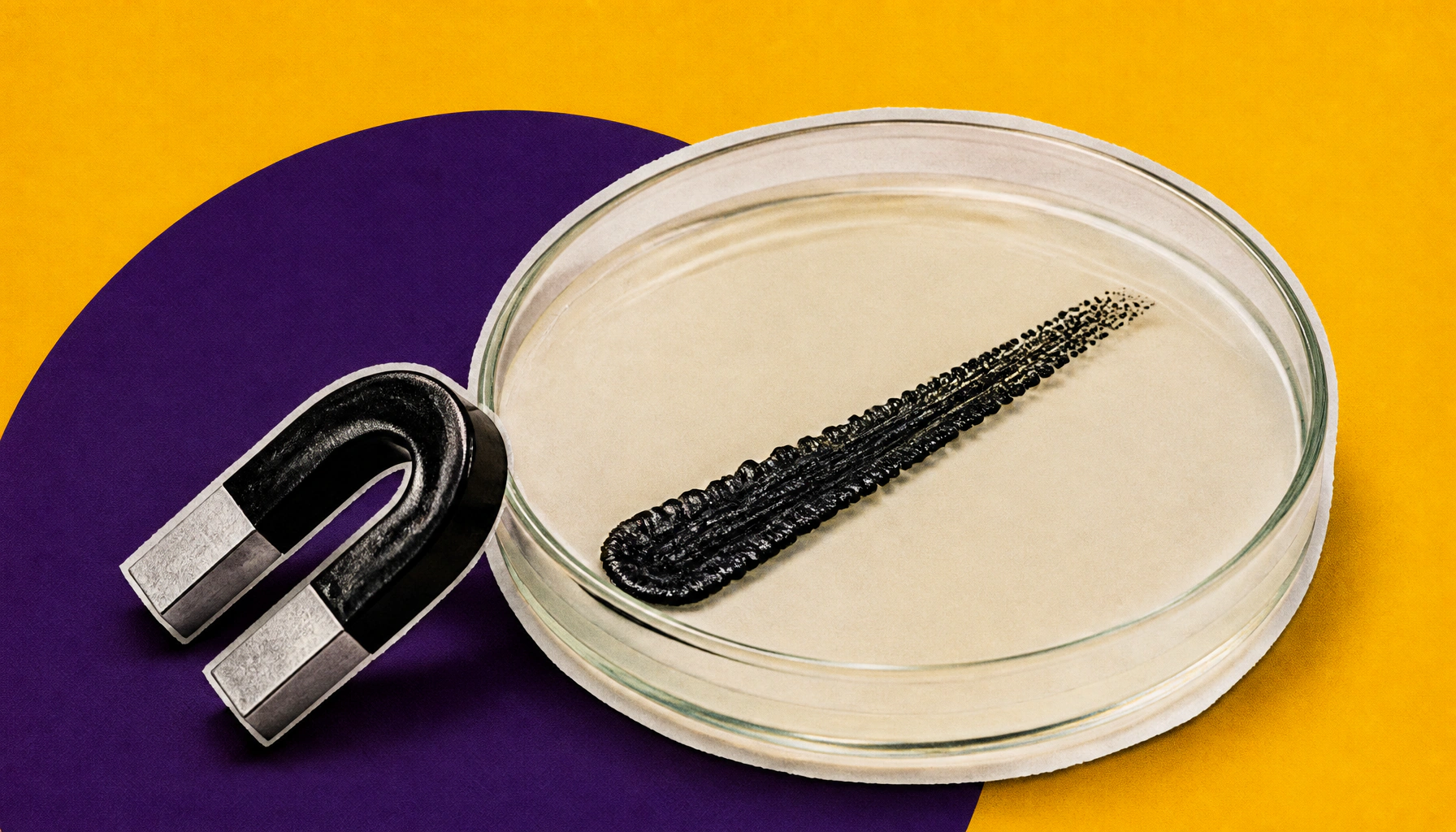
Tiny magnets, big life extension. Chinese researchers found that feeding C. elegans worms a magnetotactic bacterium called AMB-1 extended their average lifespan by over 43%. The secret? The bacteria suppressed ferroptosis — a form of cell death tied to iron buildup and oxidative stress — while also protecting neurological and intestinal health in aging worms.
Tiny magnets, big life extension
Researchers at the Hefei Institutes of Physical Science (Chinese Academy of Sciences) have discovered that a magnetotactic bacterium (MTB) called Magnetospirillum magneticum AMB-1 can dramatically extend healthy lifespan in C. elegans worms — a widely used model organism in aging research. The findings, published in Free Radical Biology and Medicine, point to a novel microbial strategy for combating aging.
The key mechanism? AMB-1 suppressed ferroptosis — a damaging form of cell death driven by iron accumulation and oxidative damage to fats inside cells. The bacteria reduced iron buildup and lowered lipid peroxidation in the worms, with several ferroptosis-related genes (including ftn-1, bli-3, and ads-1) playing a role. Crucially, the bacteria's ability to produce magnetosomes — their specialized magnetic structures — was essential to the effect.
By the Numbers:
Why it matters: While this research is in worms, it lays foundational groundwork for using magnetotactic bacteria in geriatric medicine — offering a potentially safe, biocompatible alternative to drug- or gene-based anti-aging approaches.