Curie Brief
Turn on cookies to sign in
Signing in saves your progress to your Curie account. We can only do that with cookies on — turn them on to continue.
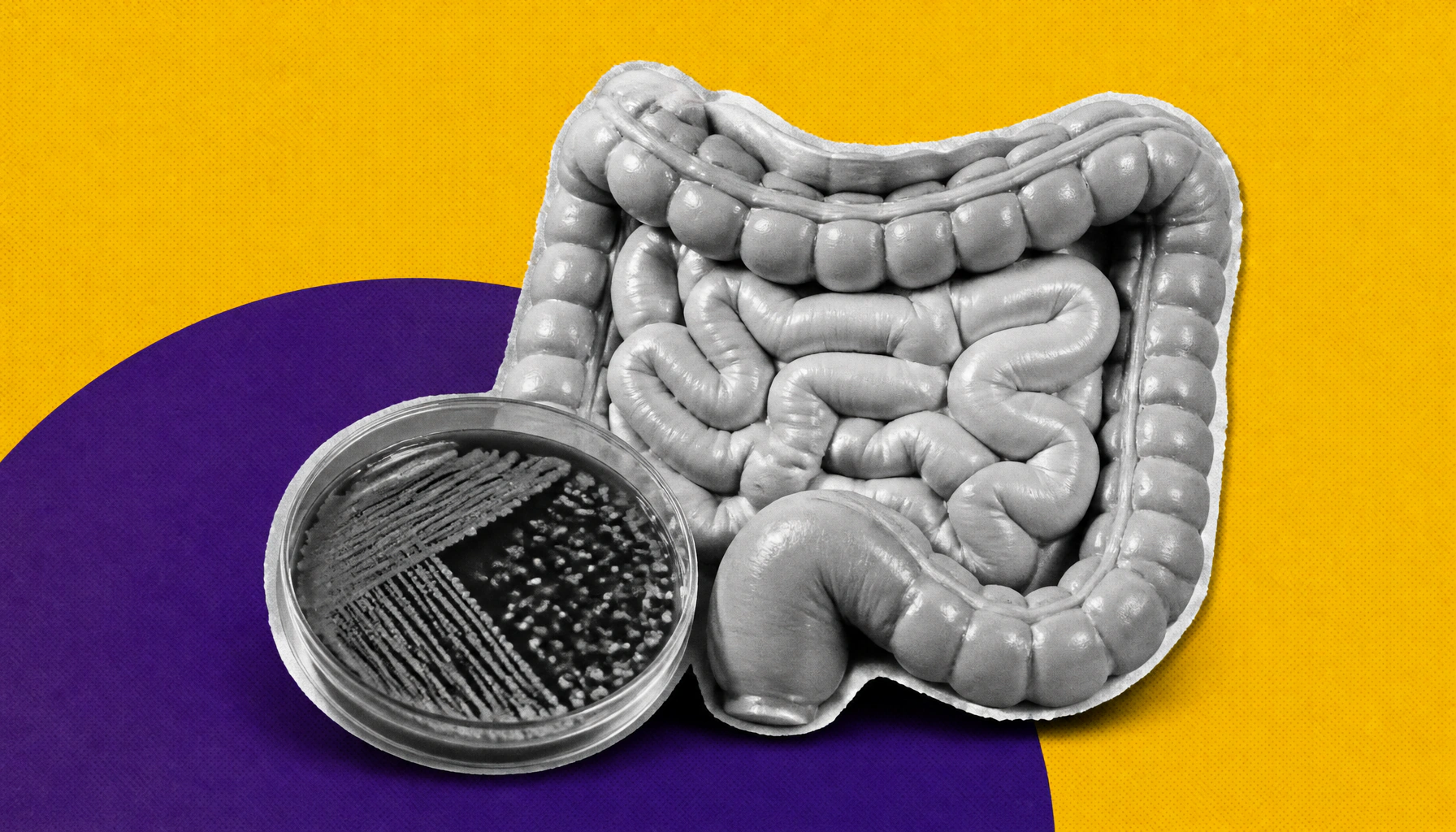
Your gut bacteria may hold the key to a longer life. A new study published in mBio found that polyamines — compounds produced by gut bacteria — can directly extend host lifespan in fruit flies. Flies colonized with polyamine-producing E. coli lived significantly longer than those without, pointing to a promising new frontier in probiotic and functional food development.
Researchers from Kindai University and Kanazawa University have shown, for the first time in a controlled setting, that metabolites produced by gut bacteria can directly extend the lifespan of their host. The study, published in mBio, used fruit flies colonized with genetically engineered E. coli strains — some capable of producing the polyamine putrescine, others not — to isolate the specific effect of bacterial polyamine production on longevity.
The results were striking: male flies colonized with polyamine-producing bacteria lived an average of 13.8 days, compared to just 11.0 days for those with polyamine-deficient bacteria. The effect in females was more variable but still notable in some groups. Mechanistically, polyamine-producing bacteria were linked to reduced expression of TotM, a gene tied to the age-associated JAK/STAT immune stress-response pathway.
By the Numbers:
Why it matters: This research establishes a robust experimental framework for studying how individual gut microbial metabolites affect long-term health — and opens the door to developing targeted probiotics and functional foods designed to optimize polyamine production for healthy aging.