Curie Brief
Turn on cookies to sign in
Signing in saves your progress to your Curie account. We can only do that with cookies on — turn them on to continue.
The Ebola outbreak in the Democratic Republic of Congo is showing no signs of slowing, with nearly 7,800 confirmed cases and over 3,700 deaths. Ituri province remains the hardest-hit region, and gaps in contact tracing are fueling new transmission chains. Community resistance to safe burial practices is adding another layer of complexity to containment efforts.
The Ebola outbreak in the Democratic Republic of Congo (DRC) is approaching a grim milestone, with 7,773 confirmed cases and 3,759 deaths reported, according to a new assessment from the European Centre for Disease Prevention and Control (ECDC). In just a 48-hour window earlier this week, 40 new confirmed cases and 27 deaths were recorded — a pace that has experts deeply concerned.
Ituri province is bearing the heaviest burden, accounting for 5,966 cases and 2,737 deaths across 28 of its 36 health zones. A critical gap in containment: only 84.5% of identified case contacts are currently under follow-up, leaving room for unknown transmission chains to emerge and spread.
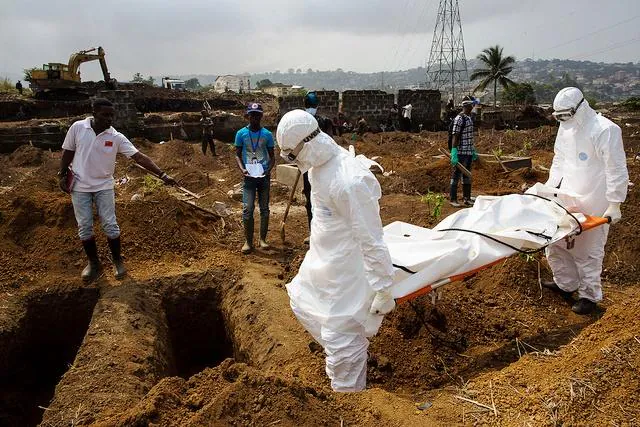
On the ground, the WHO is highlighting another challenge — community resistance to safe burial practices. In one documented case, a family refused a body bag for over 24 hours, requiring risk communication specialists to intervene before a safe burial could take place. The WHO emphasizes that community engagement and education remain the most effective tools available.
By the Numbers:
Why it matters: With contact tracing incomplete and community trust still fragile, the outbreak risks expanding further. Closing the gaps in follow-up and burial compliance are essential to breaking transmission chains before the situation worsens.