Curie Brief
Turn on cookies to sign in
Signing in saves your progress to your Curie account. We can only do that with cookies on — turn them on to continue.
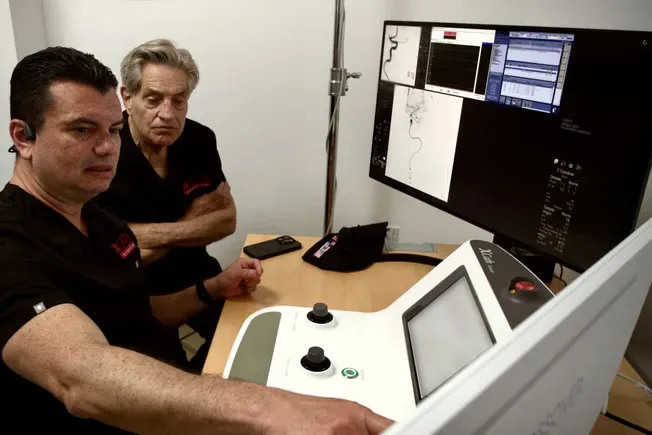
Remote surgery is no longer science fiction. From a stroke patient in Panama treated by a surgeon 150 miles away, to a transatlantic prostatectomy from Florida to Angola, telerobotic surgery is racking up real-world wins. Major medtech players are investing heavily — but regulatory, licensing, and reimbursement hurdles still stand between today's milestones and mainstream US adoption.
Remote surgery is no longer science fiction. In a landmark case, neurosurgeon Vitor Mendes Pereira performed the world's first telerobotic neurosurgery — a mechanical thrombectomy on a stroke patient 150 miles away in Panama — using XCath's robotic system. Two hours later, the 68-year-old patient was talking and moving again. Meanwhile, urologist Vipul Patel completed a transatlantic prostatectomy from Florida on a cancer patient nearly 7,000 miles away in Angola, underscoring just how far the technology has come.
Global momentum is building fast. China and India are leading the charge, with systems like MicroPort MedBot's Toumai (now CE-marked in Europe) and SS Innovations' SSi Mantra (used in 185+ telesurgeries, including 25+ cardiac cases) already in active use. Major players — Intuitive, Medtronic, and J&J — are investing in remote surgical collaboration tools, with full telesurgery capabilities on the roadmap. In the US, ARPA-H recently awarded up to $175.3 million to develop stroke thrombectomy robots, recognizing that over half of Americans live more than an hour from a capable stroke center.
By the Numbers
Why it matters: Telesurgery has the potential to democratize access to specialized surgical care for rural and underserved populations worldwide. But scaling it will require more than great technology — coordinated action on regulation, reimbursement, licensing, and patient trust will determine how quickly this life-saving innovation reaches those who need it most.