Curie Brief
Turn on cookies to sign in
Signing in saves your progress to your Curie account. We can only do that with cookies on — turn them on to continue.
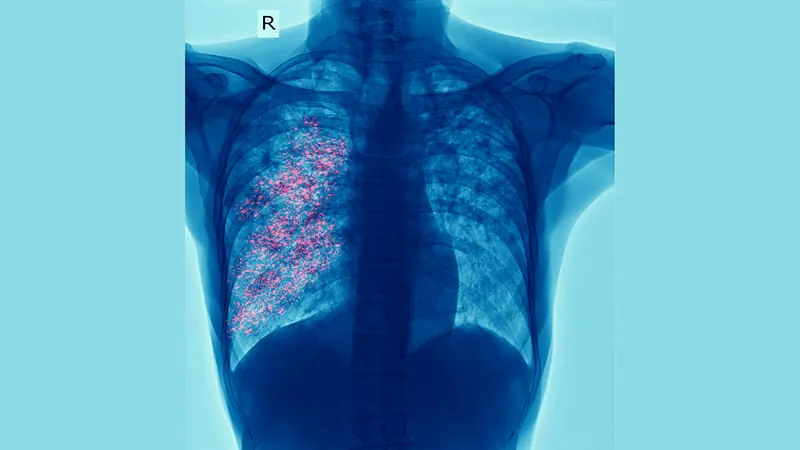
Genetic testing is carving out a bigger role in interstitial lung disease (ILD) care, with family history now recognized as the strongest risk factor. Variants in telomere, surfactant, and MUC5B genes are helping clinicians identify at-risk patients, guide monitoring, and time transplant referrals — even though no genotype-specific treatments exist yet. Experts stress that genetic testing should complement, not replace, clinical judgment.
For decades, unexplained lung scarring was lumped into a single "idiopathic" bucket. That's changing fast. Advances in genetic research have revealed that a meaningful subset of interstitial lung disease (ILD) cases are actually familial — driven by inherited variants in telomere biology, surfactant, and MUC5B genes. Family history is now considered the strongest risk factor for ILD, with studies showing 20–25% of idiopathic pulmonary fibrosis (IPF) patients have a family history, and 31% of relatives of affected individuals also carry ILD.
Despite this progress, widespread genetic screening isn't recommended yet. High-resolution CT remains the go-to for early IPF detection, and genetic testing is reserved for targeted scenarios. Experts emphasize that a negative genetic panel doesn't rule out familial predisposition, and a positive result doesn't guarantee disease — making genetic counseling an essential companion to testing.
Key Takeaways:
Why it matters: As genetic tools grow more sophisticated, pulmonologists and geneticists are moving closer to precision medicine for ILD — but experts caution the field is "promising, not yet fully mature." For now, accurate family history and multidisciplinary collaboration remain the cornerstones of care.