Curie Brief
Turn on cookies to sign in
Signing in saves your progress to your Curie account. We can only do that with cookies on — turn them on to continue.
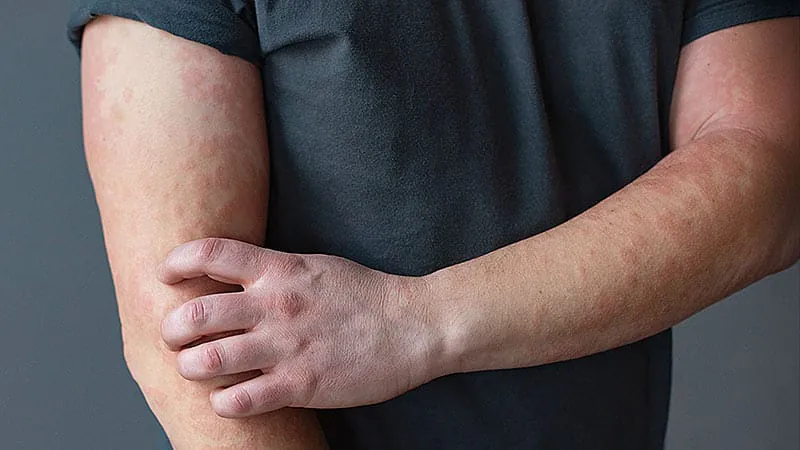
A 2-year French trial finds neither add-on narrowband UVB phototherapy nor vitamin D supplementation meaningfully improves long-term control of moderate-to-severe atopic dermatitis. Vitamin D showed a statistically significant but clinically negligible benefit, while phototherapy had no significant patient-reported impact. Both interventions also failed to reduce reliance on topical anti-inflammatory treatments.
A 2-year pragmatic trial out of France tested two popular add-on strategies for moderate-to-severe atopic dermatitis (AD) — narrowband UVB (NB-UVB) phototherapy and vitamin D supplementation — and found neither meaningfully improved long-term disease control. The study enrolled 110 patients (mean age 34.7 years) already on topical anti-inflammatory treatments (TATs), randomizing them to phototherapy vs. observation and vitamin D vs. placebo in a crossover design.
Vitamin D did produce a statistically significant reduction in patient-reported severity scores, but the effect fell well below the threshold considered clinically meaningful. Phototherapy improved some investigator-assessed scores but had no significant effect on patient-reported outcomes. Crucially, neither intervention reduced patients' cumulative use of TATs.
By the Numbers:
Why it matters: With atopic dermatitis affecting millions globally, clinicians often turn to phototherapy and vitamin D as adjuncts to standard care. This trial suggests those strategies may not deliver meaningful real-world benefit — though the underpowered sample size means the final word isn't in yet.