Curie Brief
Turn on cookies to sign in
Signing in saves your progress to your Curie account. We can only do that with cookies on — turn them on to continue.
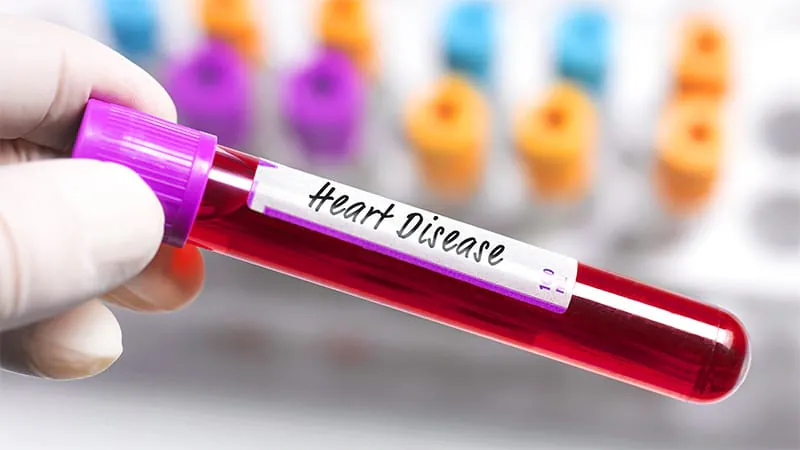
Your blood may know your heart is in trouble before you do. A large US study found that two plasma proteins — haptoglobin and IgA2 — independently predicted major cardiovascular events and death in adults with no heart disease symptoms. Those with high levels of both proteins had roughly twice the event rate compared to those with low levels, even after accounting for traditional risk scores and imaging.
A new study published in the Journal of the American Heart Association found that two plasma proteins — haptoglobin and immunoglobulin A2 (IgA2) — can independently predict major adverse cardiovascular events (MACE) and all-cause death in adults who have no cardiovascular symptoms. The findings come from the BioImage study, a large US cohort of over 5,300 adults (average age 69), who were tracked for a median of 4.6 years.
What makes this notable is that these proteins added predictive value on top of established tools like the Framingham risk score and vascular imaging (carotid ultrasound and coronary artery calcium CT scans). Adults with high levels of both proteins had approximately twice the event rate compared to those with low levels of both.
By the Numbers:
Why it matters: These proteins could serve as accessible, blood-based biomarkers to identify people at residual cardiovascular risk who might otherwise fly under the radar — potentially opening the door to earlier, more personalized preventive interventions.