Curie Brief
Turn on cookies to sign in
Signing in saves your progress to your Curie account. We can only do that with cookies on — turn them on to continue.
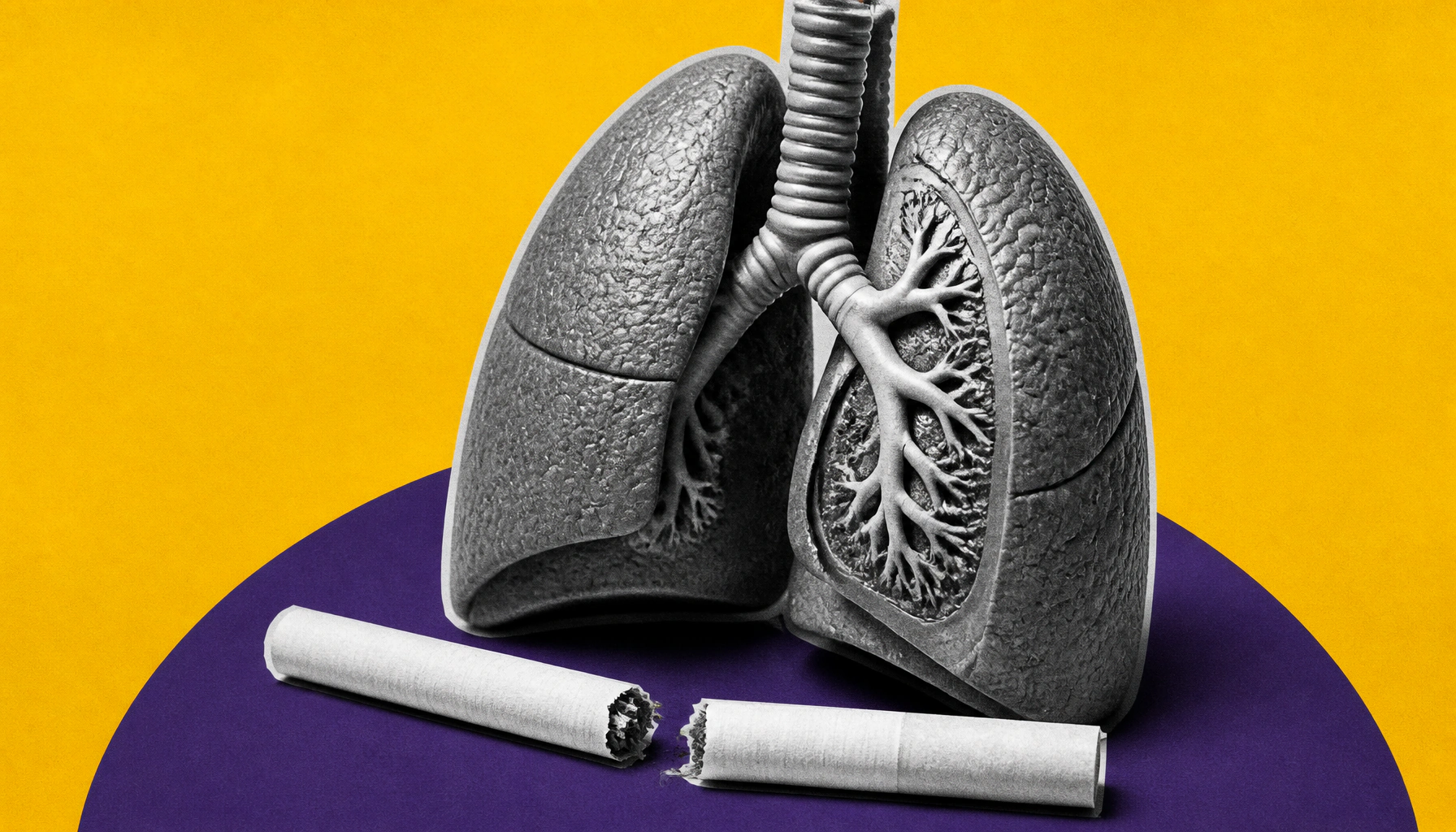
A single inherited mutation, EGFR T790M, raises lung cancer risk 25 times overall — and a staggering 60 times among people who have never smoked. A study of over 3 million people found the variant is exclusively linked to lung cancer, with no association to 17 other cancers. Experts say carriers should be referred for screening consideration immediately.
A landmark study published in Science has confirmed that a single inherited genetic mutation — EGFR T790M — dramatically elevates lung cancer risk, particularly in people who have never smoked. Researchers from Dana-Farber Cancer Institute partnered with 23andMe to analyze data from more than 3.3 million individuals, making it one of the largest genetic studies of its kind.
The mutation, historically known as a resistance variant found in tumors, was found to exist in normal (germline) DNA and confer an outsized cancer risk. Crucially, the variant showed no association with any of the 17 other cancers studied — making it uniquely and specifically tied to lung cancer.
By the Numbers:
Why it matters: Current U.S. lung cancer screening guidelines are built around smoking history, potentially missing up to 65% of patients who develop the disease. Identifying high-risk genetic carriers like EGFR T790M could open the door to expanded, genetics-based screening programs — potentially catching cancers earlier and saving lives.