Curie Brief
Turn on cookies to sign in
Signing in saves your progress to your Curie account. We can only do that with cookies on — turn them on to continue.
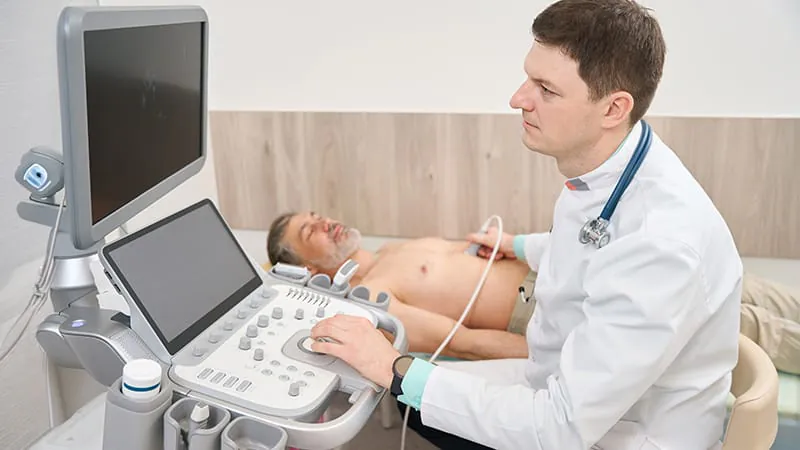
Skipping the scope? Ultrasound may be enough. A meta-analysis of 11 studies found that intestinal ultrasound (IUS) detected postoperative Crohn's disease recurrence with 87.6% sensitivity and 80.2% specificity. A positive IUS result more than quadrupled the likelihood of recurrence, while a negative result reduced it by nearly 85%, making it a strong noninvasive surveillance tool.
Skipping the scope? Ultrasound may be enough.
A meta-analysis of 11 studies published in the Journal of Crohn's and Colitis found that intestinal ultrasound (IUS) is a clinically useful, noninvasive tool for detecting postoperative recurrence of Crohn's disease. Across all studies, IUS achieved 87.6% sensitivity and 80.2% specificity — strong enough to meaningfully stratify patients by recurrence risk and guide decisions about whether closer monitoring or ileocolonoscopy is needed.
Adding to the picture, a separate prospective study presented at DDW 2026 found that combining IUS with fecal calprotectin testing at just 3 months post-surgery predicted endoscopic recurrence at 6 months with 94% specificity and an 81% positive predictive value — suggesting even earlier risk stratification may be possible.
By the Numbers:
Why it matters: Up to 70% of Crohn's patients experience endoscopic recurrence within 12 months of surgery — often without symptoms. Current guidelines rely on invasive colonoscopy for surveillance, but these findings support a shift toward noninvasive, risk-stratified monitoring that could reduce unnecessary procedures and enable earlier treatment intervention.